For a Moment, I Chose to Remember
Oh my.
Which of the myriad things that are happening in our country right now should I write about today?
Some Monday mornings I sit down to write Julie’s Journal and wonder what I want to talk about. Lately, the problem is exactly the opposite. There is so much happening that I hardly know where to begin.
Just consider what has happened recently.
The White House is banning major news organizations.
President Trump announced Friday that CNN, MS NOW and Politico would be barred from the White House because, he said, they report “fake news.” He also suggested other organizations could follow. By Saturday, MS NOW reported that its journalists had been denied access to the White House grounds. First Amendment experts have raised serious constitutional concerns, particularly if journalists are being excluded because the administration objects to their coverage. (Reuters)
The administration tried to impose new restrictions on voting by mail.
A Trump administration Postal Service rule would require states to provide lists of voters eligible for mail ballots and use specially barcoded envelopes. Two federal judges have blocked the rule. One of them, U.S. District Judge Carl Nichols — himself appointed by Trump — concluded that key parts exceeded the Postal Service’s statutory authority and could make voting by mail more difficult for some Americans. The administration disputes that the rule would prevent eligible people from voting and has pursued the matter in court. (Reuters)
The administration’s rapid deportation policy suffered another defeat in court.
On Friday, a federal appeals court rejected a Trump administration policy allowing authorities to rapidly deport some migrants to third countries. The litigation centers on what process people must receive before being sent to countries other than their own. (Reuters)
The Justice Department is still trying to revive criminal cases against prominent Trump critics.
Federal appeals judges this week questioned the Justice Department’s attempt to resurrect prosecutions of former FBI Director James Comey and New York Attorney General Letitia James. The administration says its prosecutions are based on law rather than politics; critics have characterized the cases as part of a broader campaign of retribution against Trump opponents. (Reuters)
And the administration continues trying to dismantle federal agencies created by Congress.
A federal appeals court this week questioned the administration’s effort to effectively dismantle three small federal agencies, another front in the continuing legal battle over how much authority a president has to eliminate or disable agencies established by Congress. (Reuters)
Five stories.
And that is hardly the entire list.
I could write a newsletter about any one of them.
But today, I’m not going to.
Because this weekend I went to Hummel Park in Plainfield, Indiana, and for a little while, I was reminded of something we desperately need to remember.
More Than 58,000 Names
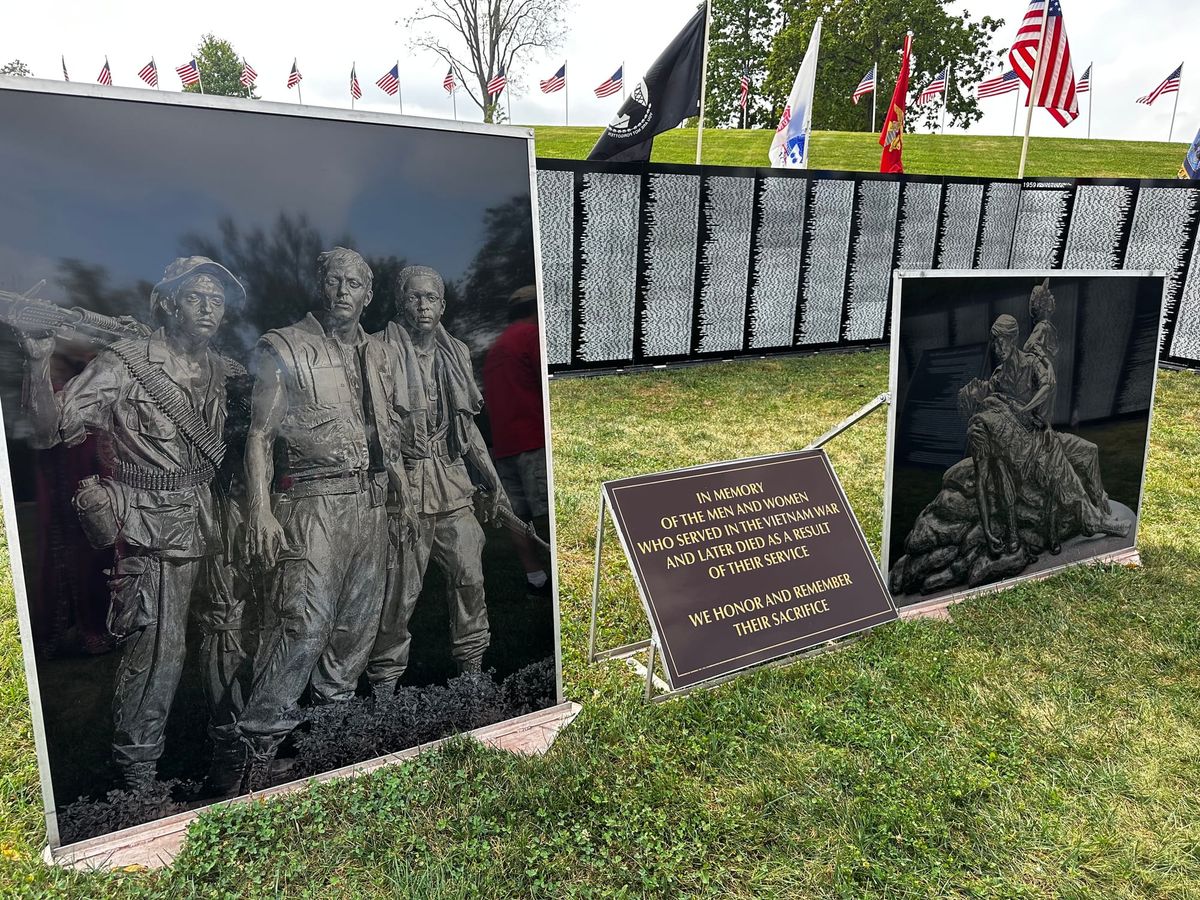
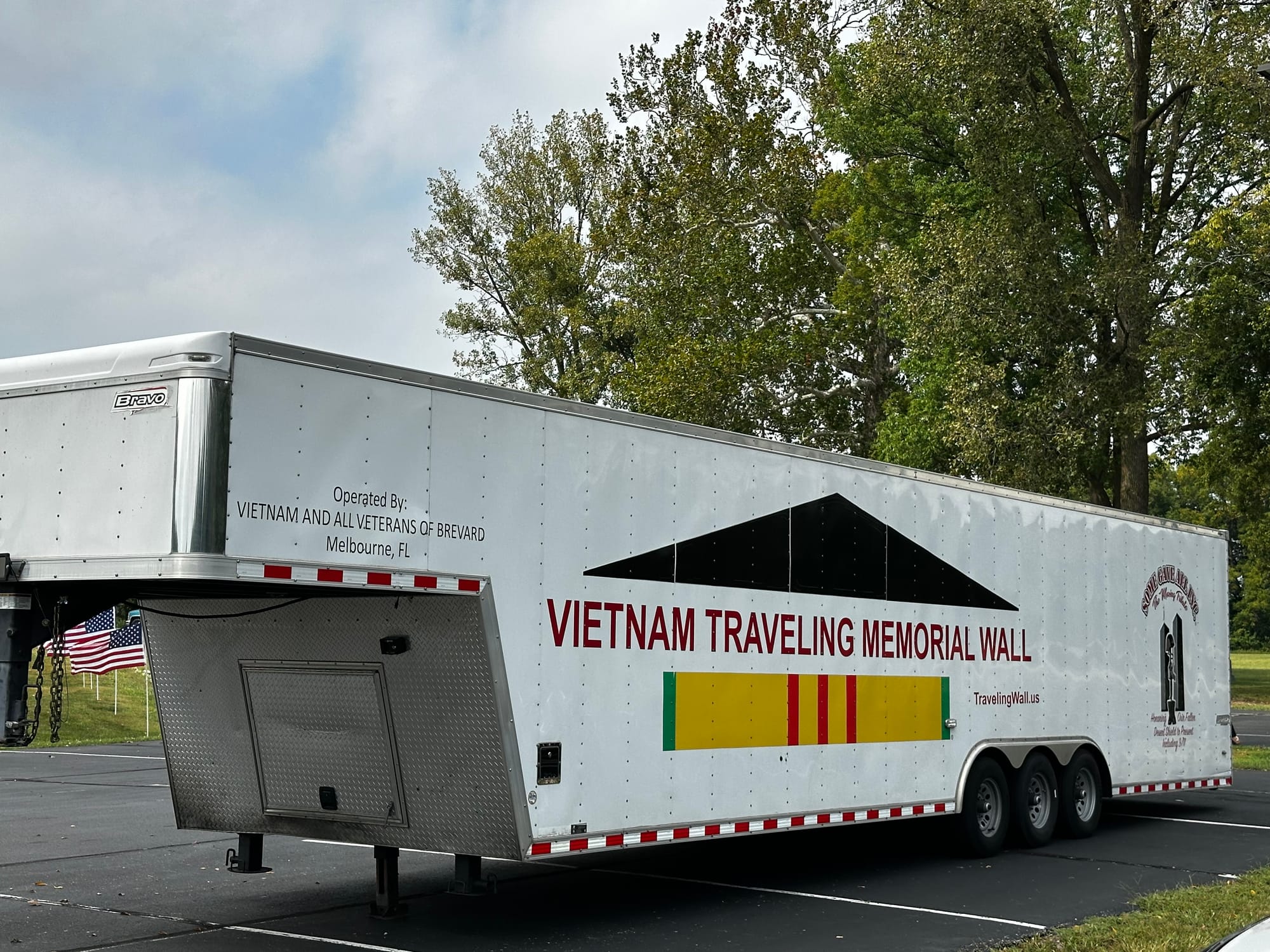
The Vietnam Traveling Memorial Wall came to Plainfield this weekend as part of the community’s Quaker Days celebration.
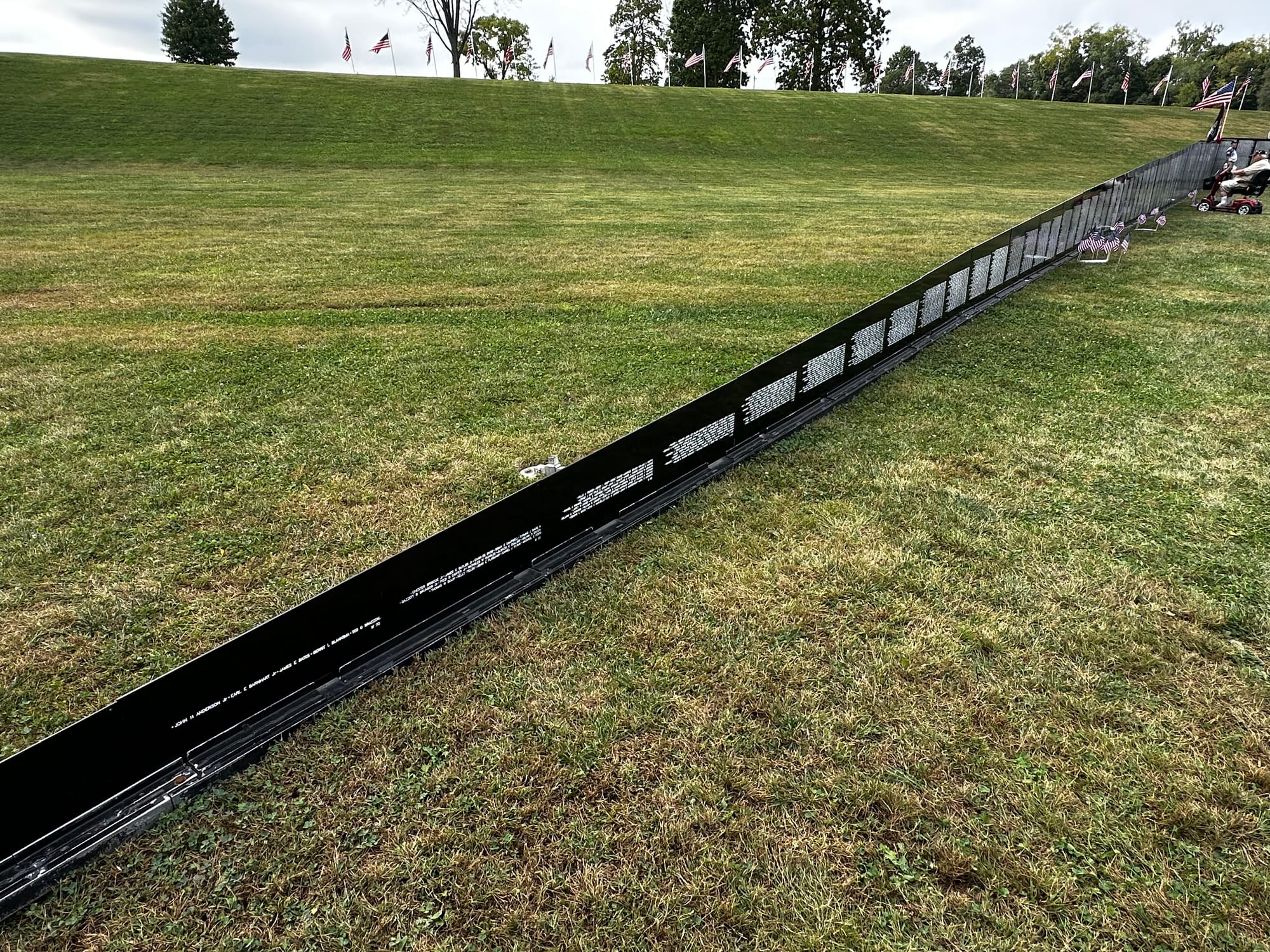
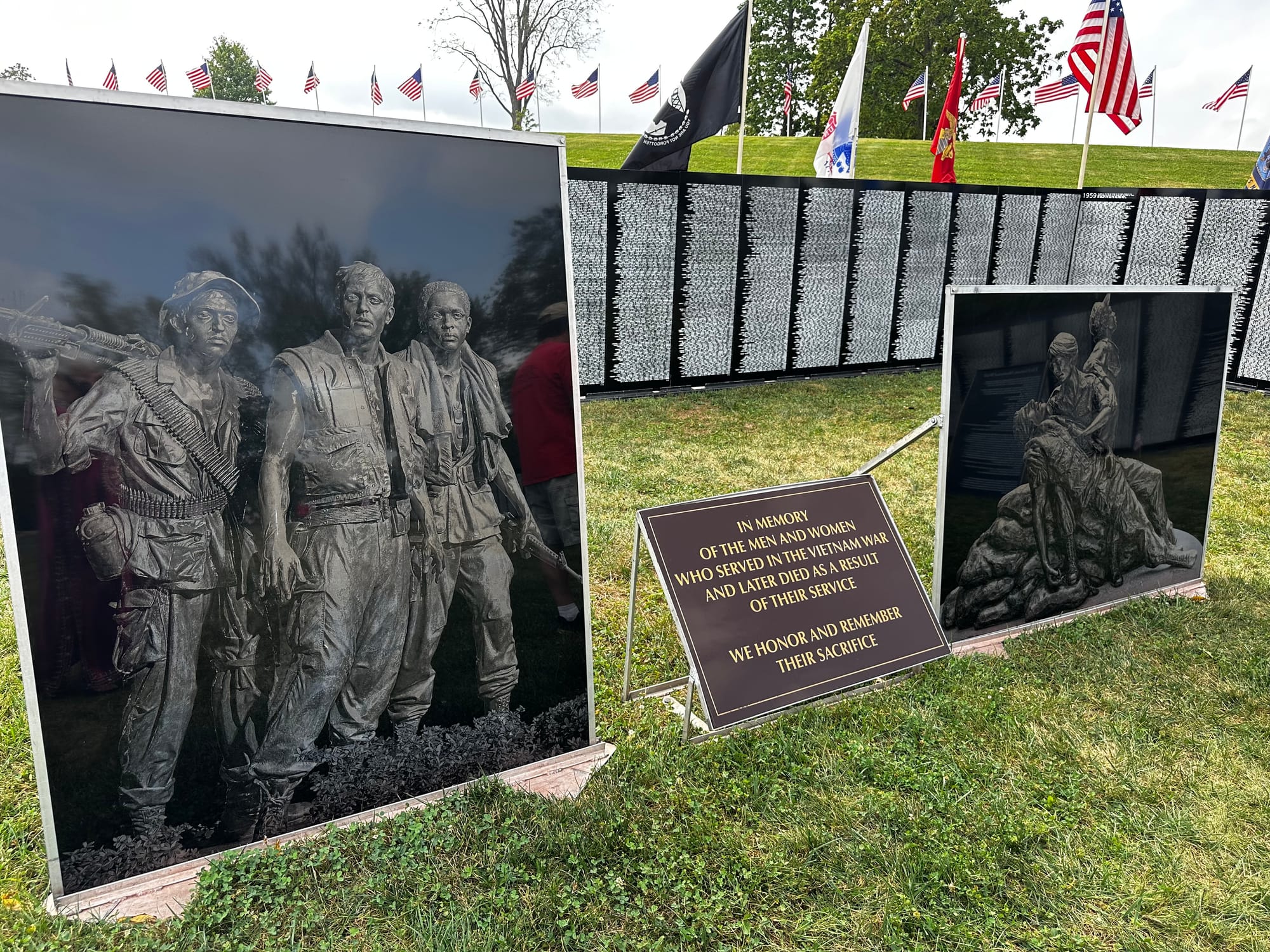
It is a three-fifths-scale replica of the Vietnam Veterans Memorial in Washington, D.C. It stands six feet tall at its center and stretches nearly 300 feet.
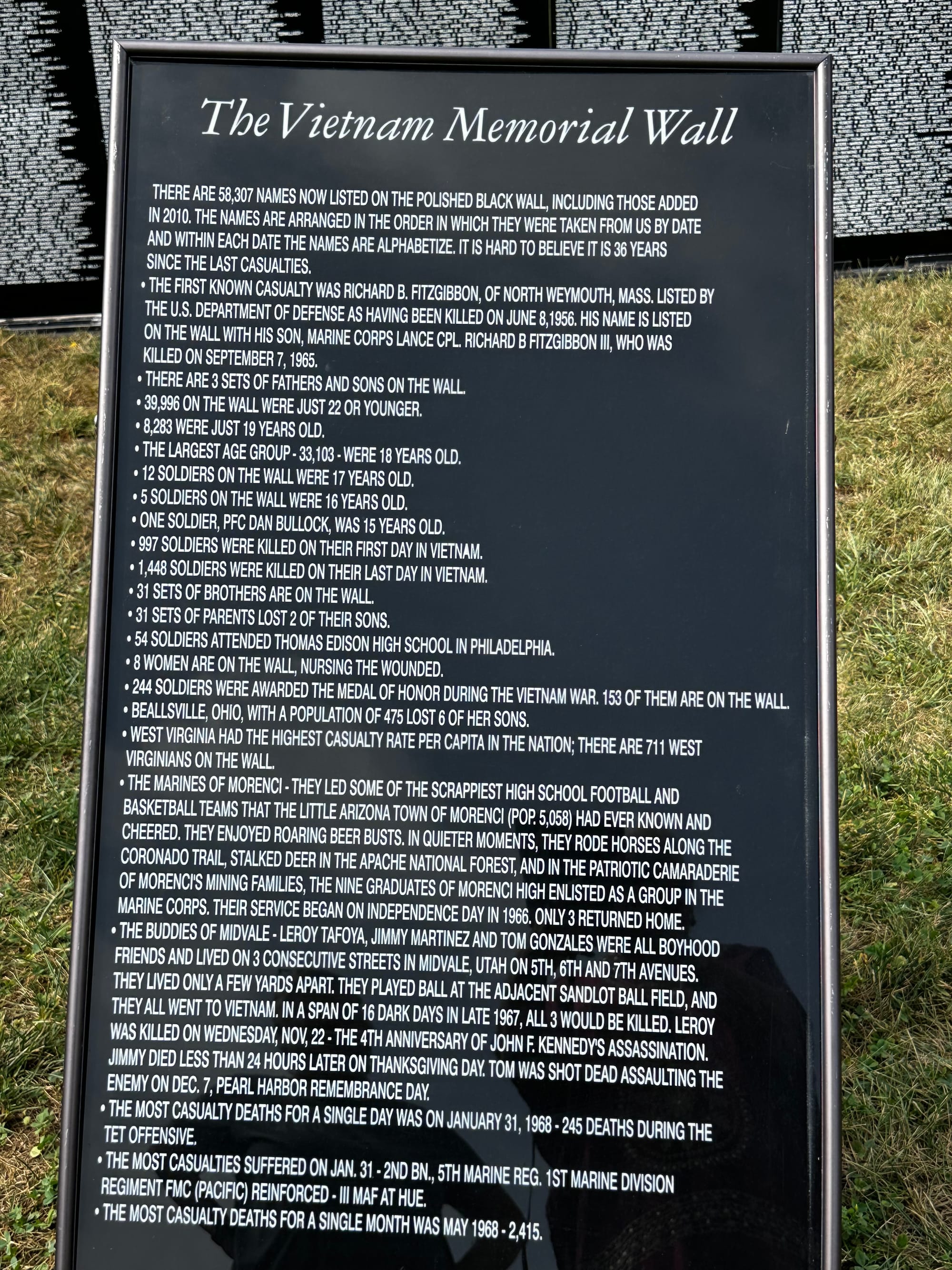
And on it are more than 58,000 names.
Not Republicans.
Not Democrats.
Not liberals or conservatives.
Names.
Sons. Brothers. Husbands. Fathers. Friends.
Young men and women who once had plans for what they would do next week, next year and for the rest of their lives.
They never got that chance.
The Traveling Wall exists in part so that people who cannot make the journey to Washington can still stand before those names and remember. Here in Indiana, we were given that opportunity almost in our own backyard. (Duke Energy | News Center)
I took photographs while I was there, and I’m sharing some of them with you today.
But photographs don’t quite capture what happens when you stand in front of a memorial like this.
There is something about seeing name after name after name that makes history stop being history.
It becomes human.
And alongside the remembrance of Vietnam was remembrance of the lives lost on September 11 — another generation marked by a day when ordinary people went to work, boarded airplanes, reported for duty or answered emergency calls without knowing history was about to find them.
Standing there, I found myself thinking about service.
About sacrifice.
And, strangely enough, about democracy.
Democracy Is More Than Politics
We tend to talk about democracy as though it belongs to politicians.
It doesn’t.
Presidents come and go. Members of Congress come and go. Political parties win elections and lose them.
The country belongs to us.
The Constitution belongs to us.
Freedom of speech belongs to us.
Freedom of the press belongs to us.
The right to vote belongs to us.
And the responsibility to protect those things belongs to us, too.
Whatever one’s politics, memorials like the Vietnam Wall ask something of us that is much deeper than partisanship:
What are we doing with what others sacrificed to preserve?
That question stayed with me.
More than 58,000 Americans whose names appear on that wall did not get to grow old.
Think about that for a moment.
They didn’t get the years that so many of us sometimes casually complain about.
They didn’t get retirement.
They didn’t get grandchildren.
They didn’t get another Christmas, another birthday, another ordinary Sunday morning.
They didn’t get the privilege of looking back over a long life and wondering what to do with the years still ahead.
And perhaps that is why places like this matter so much.
They remind us that time is precious.
They remind us that freedom is precious.
They remind us that citizenship carries responsibilities along with rights.
And they remind us that behind the enormous sweep of American history are individual human beings.
So Today, I Choose to Remember
Tomorrow I may be angry again.
I may write about the White House and the press.
I may write about voting rights.
I may write about immigration, the courts, Congress or any of the other issues demanding our attention.
Those things matter enormously, and I don’t intend to stop paying attention to them.
But I also don’t want the constant roar of today’s political news to make me forget something even more fundamental.
We inherited something.
An imperfect country, certainly.
A country that has made terrible mistakes.
A country that sent young Americans into a war that divided a generation and left wounds that lasted for decades.
But also a country filled with people who served, sacrificed, protested, questioned, marched, voted, reported, spoke out and kept trying to make this American experiment live up to its promises.
Standing before that wall in Plainfield, I wasn’t thinking about the latest headline.
I was thinking about the names.
And perhaps every once in a while, that is exactly what we need to do.
Turn down the noise.
Remember who came before us.
Remember what they gave.
And then ask ourselves a simple question:
What will we do with what they left in our hands?
Thank you, as always, for reading Julie’s Journal. And thank you especially to those of you who share these essays with friends and family. That’s how this little community continues to grow, one reader at a time.
If someone shared this newsletter with you and you’d like to receive Julie’s Journal directly, I hope you’ll subscribe. Julies-journal.ghost.io
Until next time,
Julie Bolejack, MBA
The Mindful Activist
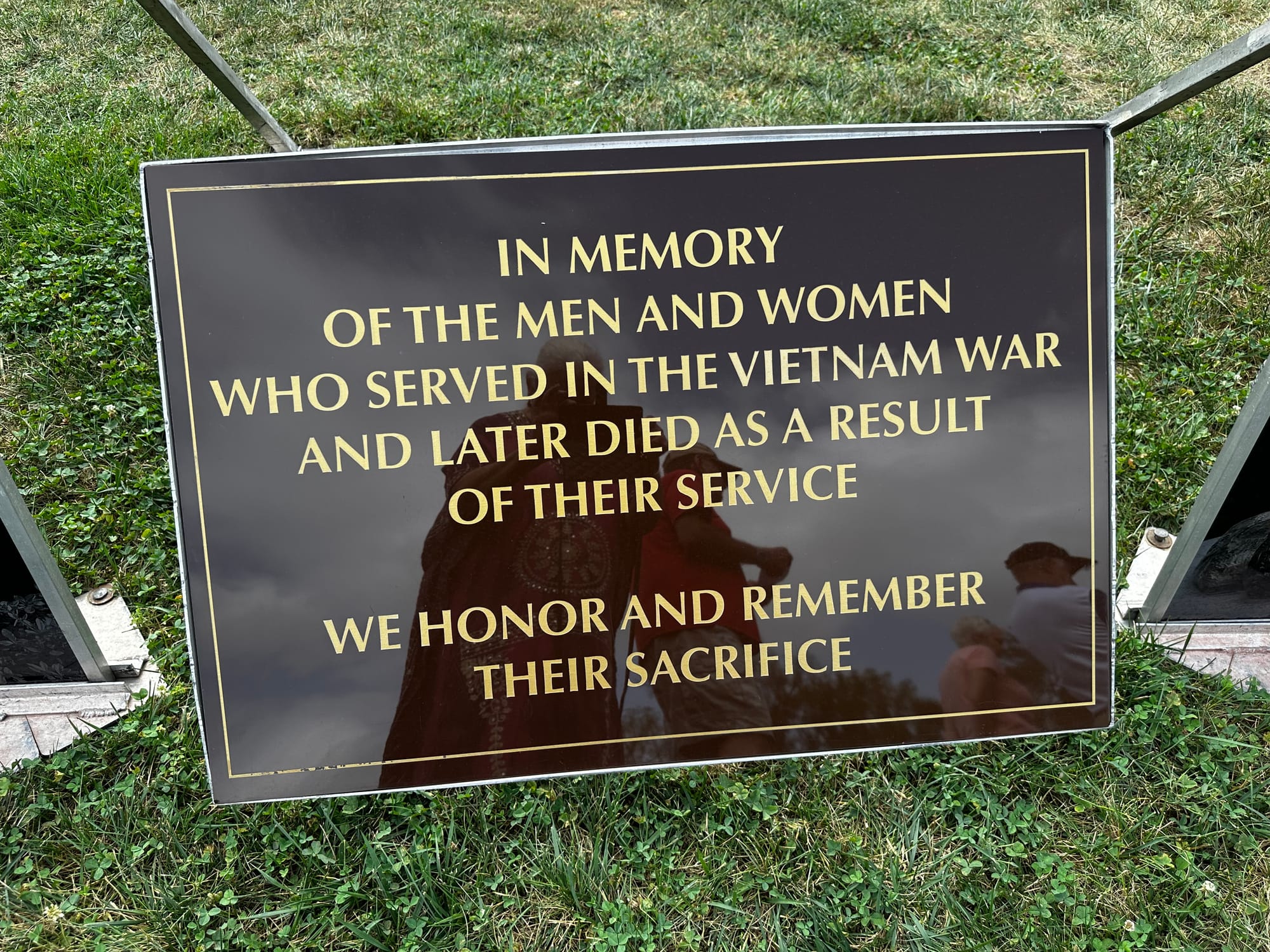
The memorial also honored those who died on September 11. There was no mention of the people who protected our country on January 6. Maybe someday?