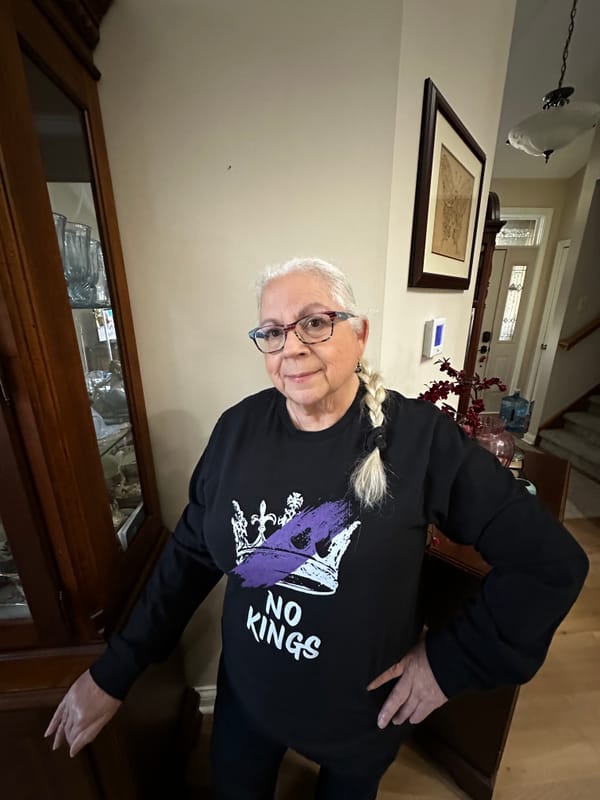
I’m not done about this..
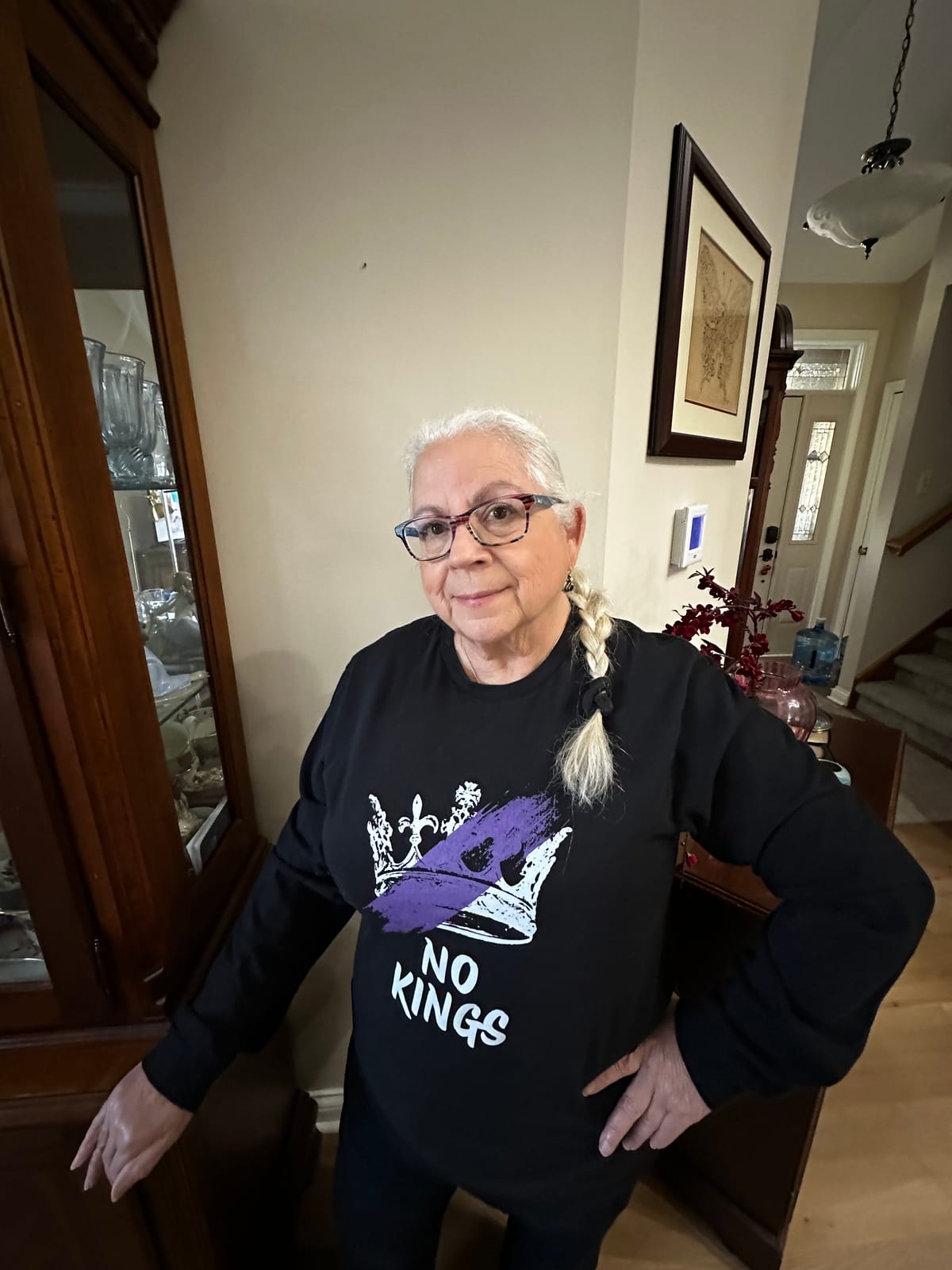
There is a certain tone people use when they talk about protests now. You know it. You’ve heard it.
“Performative.”
“Pointless.”
“Nothing changes.”
“A waste of time.”
“My favorite is the casual shrug dressed up as wisdom: If it mattered, it would look different.
Or the more aggressive versions:
“Get a job.”
“Find a hobby.”
“You’re embarrassing yourselves.”
And of course, the modern classic—delivered with a smirk and a meme:
“This is just therapy for liberals.”
It’s all so easy to say from a distance. From a couch. From behind a screen. From a life untouched by the very things people are marching about.
It’s easy to be cynical about something you’ve never stood inside of.
Because I did stand inside it.
I didn’t scroll past it.
I didn’t comment on it.
I didn’t reduce it to a punchline.
I walked into it.
I walked into a crowd of human beings who had made a decision—quietly or loudly, reluctantly or fiercely—to show up for something larger than themselves.
And once you are there, once you are in it, the cynicism starts to sound… hollow. Thin. Almost embarrassed by its own smallness.
Because here is what I saw.
I saw an older Black man—an army veteran—standing steady on one leg, the other lost in service to a country he still cared enough about to show up for again. No cameras around him. No performance. Just presence.
Tell me again how that is “performative.”
I saw a 90-year-old white woman in a wheelchair, her hands resting on a handmade sign that was not clever or polished or designed for social media. It was simple. It was direct. It was hers.
She was surrounded by her five adult children—people she raised—who had learned something from her about what it means to care. They didn’t drop her off. They didn’t stay home and post about it.
They brought her. They pushed her. They honored her.
Tell me again how that is “pointless.”
I saw a little girl—maybe ten—holding her sign like it mattered. Because to her, it did. Her eyes were wide, not with fear, but with awareness. With the dawning understanding that citizenship is not passive. That voices are meant to be used.
She will remember that day.
Not the tweets.
Not the hot takes.
That day.
Tell me again how “nothing changes.”
And then there was me.
Seventy-three years old.
Walking through that crowd in a Handmaid’s costume—not because I think I am in a television show, not because I needed attention, not because it was clever.
But because symbols still matter.
Because women’s rights are not theoretical.
Because history has a way of repeating itself when people get comfortable dismissing the early warnings as exaggeration.
I walked. I hugged strangers. I sang with them. I shook hands with people I will never see again.
I thanked them.
Over and over, I found myself saying the same words: Thank you for caring.
Do you know how rare that is becoming?
To care without irony.
To care without needing to monetize it.
To care without first checking whether it will be mocked.
And here is the thing that cynicism cannot quite understand:
Protests are not just about immediate outcomes.
They are about witnessing.
They are about refusing to disappear quietly.
They are about saying, in a world that is increasingly comfortable with apathy, I am still here, and I still believe this matters.
No, a single protest does not flip a switch and fix a system.
No, one day in the street does not undo years of policy or power.
But movements—real ones, lasting ones—have never been built on silence.
They are built on accumulation.
On presence.
On moments like the ones I saw layered together until they become something that cannot be ignored.
Cynicism loves to pretend it is wisdom.
That it is somehow more intelligent to dismiss than to participate.
But more often than not, cynicism is just distance wearing a clever outfit.
It asks nothing of you.
It risks nothing.
It contributes nothing.
It keeps your hands clean and your conscience quiet.
And if that is your choice, truly—it is your choice.
Make fun of it.
Roll your eyes.
Call it naïve.
Call it dramatic.
Call it whatever helps you stay comfortably removed.
But understand this:
While you are doing that, there are people—real people—standing in the street, carrying their histories, their fears, their hopes, their fragile, stubborn belief that this country is still worth showing up for.
A man on one leg.
A woman in a wheelchair.
A child with a handmade sign.
And yes—a 73-year-old woman in a red cloak, walking through a crowd and choosing, again, not to be silent.
That was my day.
You can call it performative.
I will call it human.
Julie Bolejack, MBA
The Mindful Activist
Subscribe at julies-journal.ghost.io to avoid the overlords and algorithms