Not much else to say today

🤬
Julie Bolejack, MBA
🤬
Julie Bolejack, MBA

Can I ask you something? When was the last time you felt like enough? Not almost enough. Not enough-for-now-but-working-on-it. Not enough-compared-to-where-I-was-three-years-ago. Just… enough. Take your time. I’ll wait. If you’re struggling to answer that, you’re not alone. You’re also not broken. You are, however, living in

I need to tell you something. And I need you to actually hear it. Not scan it. Not nod politely and move on to the next thing. Not file it under “nice thought” and forget it by Thursday. Hear it. You have permission. That’s it. That’s the whole
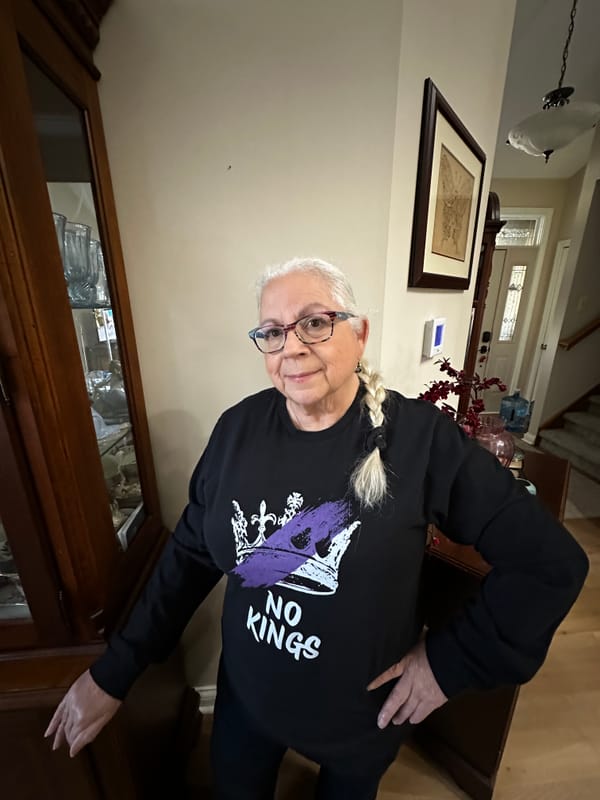
There is a certain tone people use when they talk about protests now. You know it. You’ve heard it. “Performative.” “Pointless.” “Nothing changes.” “A waste of time.” “My favorite is the casual shrug dressed up as wisdom: If it mattered, it would look different. Or the more aggressive versions:
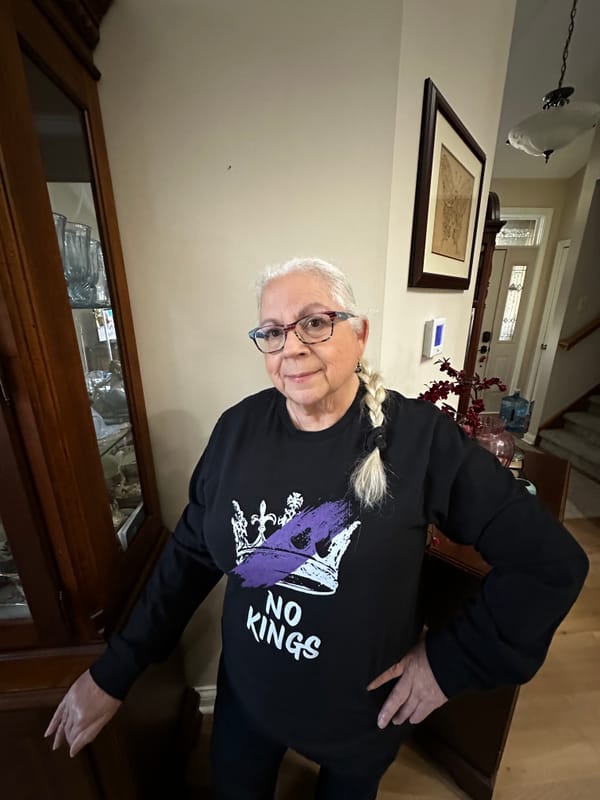
A Saturday that, on paper, probably looked like any other. Coffee. Errands. Maybe a walk if the weather cooperated. Except it wasn’t. Because while one man, Donald Trump, spent the day tucked safely behind the gates of Mar-a-Lago, eight million Americans stepped out of their homes and into the