Is It Just Me? Because I’m Confused
Julie’s Journal | Wednesday, November 4, 2026
I have a question.
And I’m asking it sincerely.
What exactly does the Republican Party stand for anymore?
Because I thought I knew.
I grew up in an America where the two major political parties had recognizable identities. You might agree with one more than the other, but at least you had some idea of what each believed.
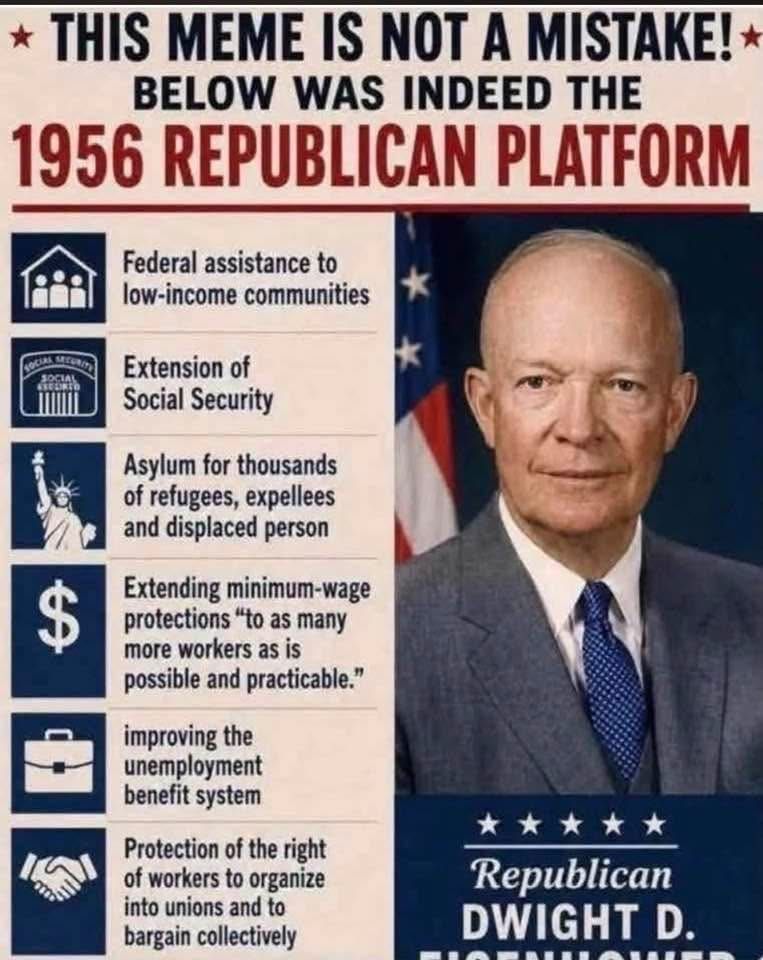
Republicans were the party of smaller government, fiscal responsibility, free enterprise, personal accountability, strong national defense, and traditional conservative values.
Democrats were generally the party of working people, social programs, civil rights, and a more active role for government in addressing economic inequality.
Those descriptions were never perfect. Both parties had their contradictions. Both changed over time.
But there were some basic principles you could recognize.
Today?
I’m not so sure.
And the more I look at the Republican Party, the more confused I become.
Let’s start with smaller government.
Wasn’t that practically the Republican Party’s calling card?
Government should stay out of people’s lives. Washington shouldn’t dictate how Americans live. Individual freedom was supposed to be sacred.
But today, Republican politicians seem remarkably comfortable with government inserting itself into some of the most personal decisions people make.
What medical care can someone receive? What books can children read? What can teachers discuss in classrooms? What reproductive choices can women make?
Apparently, government is too big when it regulates business, but just the right size when it regulates personal behavior.
How does that work?
And what happened to fiscal responsibility?
For decades, Republicans warned us about federal deficits, government spending, and the national debt.
They talked about balancing budgets and not leaving our grandchildren with the bill.
Yet Republican administrations have also presided over enormous deficits, and the party continues to champion tax policies that can add trillions to the debt without corresponding spending reductions.
I’m not suggesting Democrats have been models of fiscal restraint. They haven’t.
But if fiscal responsibility is one of your defining principles, shouldn’t it remain a principle regardless of who’s in the White House?
Then there’s free trade.
I remember when Republicans were the champions of free markets and international commerce.
They argued that competition made America stronger, that trade created opportunity, and that government shouldn’t interfere unnecessarily in the marketplace.
Now tariffs are celebrated as economic weapons, and government intervention in trade has become a central feature of Republican economic policy.
There may be legitimate arguments for protecting certain American industries.
But let’s at least acknowledge that this is a significant departure from what Republicans used to preach.
And what about character?
Oh, this one really gets me.
Remember when Republicans talked constantly about family values, personal integrity, morality, and the importance of character in public office?
Remember when a politician’s behavior was considered a reflection of whether that person deserved the public’s trust?
Today, conduct that once would have generated outrage is often dismissed, excused, or defended when it comes from someone on the right political team.
I don’t expect politicians to be saints.
But I do expect some consistency.
If character matters, it should matter whether the person has an R or a D after their name.
Perhaps the most troubling change involves the Constitution and our democratic institutions.
Conservatives traditionally spoke about respecting the Constitution, limiting executive power, preserving checks and balances, and protecting the institutions that have sustained this country.
Yet today, much of the Republican Party seems willing to embrace an extraordinarily powerful presidency, at least when the president is Donald Trump.
Congressional oversight? Judicial independence? Respect for election outcomes?
These should not be partisan conveniences.
They should be American principles.
And that brings me to something else I find difficult to understand.
When did loyalty to one man become so central to the identity of an entire political party?
Political parties are supposed to represent ideas, values, and policy priorities.
Leaders come and go.
Principles are supposed to endure.
But increasingly, the Republican Party seems less defined by a consistent philosophy of government than by its allegiance to Donald Trump and his America First movement.
That doesn’t mean every Republican agrees with him.
I know there are Republicans who still believe deeply in limited government, fiscal restraint, constitutional principles, and personal integrity.
I suspect some of them are asking the same questions I am.
But where are their voices?
Where are the Republican leaders willing to say, publicly and unequivocally, that a principle is a principle even when defending it is politically inconvenient?
And here’s another question.
What happened to governing?
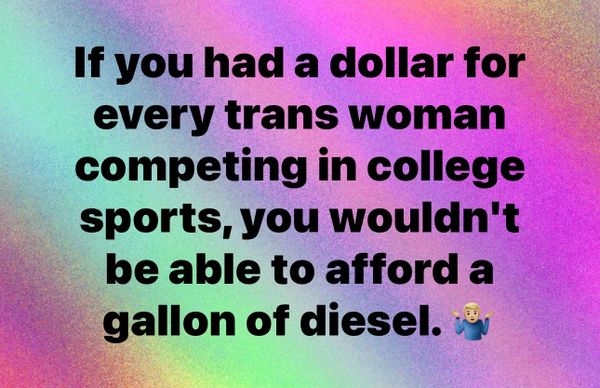
I hear endless arguments about transgender athletes, immigration, DEI, books, bathrooms, and whatever cultural controversy happens to dominate the headlines.
Some of those issues deserve legitimate public debate.
But meanwhile, Americans are worried about paying their bills, affording healthcare, finding housing, protecting their retirement, and making sure their children have opportunities.
Where is the sustained, serious conversation about those problems?
Where are the practical solutions?
And when did winning the next cultural battle become more important than solving the problems people actually live with every day?
Now, before someone tells me that Democrats have changed, too, let me save you the trouble.
Of course they have.
And Democrats deserve scrutiny, criticism, and accountability just as Republicans do.
But today I’m asking about Republicans because the transformation of that party has been so extraordinary.
I can understand a political party evolving.
The country changes. The economy changes. The world changes. Political philosophies must adapt.
But evolution is one thing.
Abandoning or reversing principles that once defined your party is something else entirely.
And perhaps that’s what I find most unsettling.
I don’t necessarily agree with the Republican Party I grew up knowing.
But I understood what it claimed to believe.
Today, I see a party that champions freedom while supporting restrictions on personal choices. A party that celebrates limited government while embracing expansive presidential authority. A party that once championed free trade but now embraces tariffs. A party that talks about fiscal responsibility while supporting policies that can substantially increase the national debt.
And a party that once placed enormous emphasis on character but now seems willing to make extraordinary exceptions.
Maybe there’s an explanation that ties all of this together.
Maybe the Republican Party has simply decided that its old principles are no longer relevant.
Or maybe the principles haven’t disappeared at all.
Maybe they’ve just become negotiable.
And that, to me, is the most disturbing possibility.
Because political parties should be able to change their policies without abandoning their integrity.
They should be able to disagree without abandoning democratic norms.
And they should be able to support a president without surrendering their independent judgment.
So, is it just me?
Am I missing something?
Or has the Republican Party become so different from the party many of us remember that even its traditional definition no longer applies?
I’d genuinely like to know.
Because at this point, I’m not sure whether I’m watching a political party reinvent itself or watching it forget what it once claimed to stand for.
And those are two very different things.
Julie Bolejack, MBA
The Mindful Activist
To subscribe: julies-journal.ghost.io