The Things We Miss When We’re Not Looking
An autumn drive, a remarkable art collection, and an unexpected lesson about the lives we choose to live.
There are few things more beautiful than the Indiana University campus on a glorious fall afternoon.
And yesterday was glorious.
The trees were showing off in their finest autumn colors, the limestone buildings were practically glowing in the afternoon sunlight, and the whole campus looked like something out of a university admissions brochure. You know, the kind that makes you want to go back to college, until you remember there would be exams.
It reminded me what a treasure we have right here in Indiana.
And it also reminded me how deeply disappointed I am in the current leadership of that university.
For generations, IU has enjoyed a reputation as a place of intellectual curiosity, academic freedom, diversity, and opportunity. A place where people from different backgrounds, cultures, countries, and perspectives could come together to learn.
I believe President Pamela Whitten has done enormous damage to that reputation. Her administration’s handling of campus protests, questions surrounding academic freedom, and its approach to dissent have left many of us wondering what happened to the welcoming, independent-minded institution we once admired.
The beautiful buildings remain. The extraordinary faculty and students remain. But a university’s reputation is built on considerably more than limestone and landscaping.
And since we’re going to vote today, let me just say that experiences like this only reinforce my determination to vote blue, blue, blue, blue, blue.
There. I’ve gotten that off my chest.
Now, back to our lovely afternoon.
A Little Red Corvette and a Beautiful Fall Day
We decided to take the little red Corvette down to Bloomington for an afternoon adventure.
No elaborate itinerary. No luggage. No airport security. Just a beautiful day, a beautiful car, and a destination about an hour from home.
Sometimes that’s all you need.
We drove around campus, admiring the architecture and the autumn scenery, before heading to the Sidney and Lois Eskenazi Museum of Art.
I’ve wanted to visit this museum for a particular reason.
It was designed by I. M. Pei, one of the world’s most celebrated architects, who also designed the famous glass pyramid at the Louvre in Paris.
And since we’ll be visiting Paris next spring, it seemed especially appropriate to appreciate a little Pei architecture right here in Indiana.
The museum itself is a remarkable building, with its striking geometric design, soaring spaces, and an interior that makes the architecture part of the experience.
But the real treasures, of course, are inside.
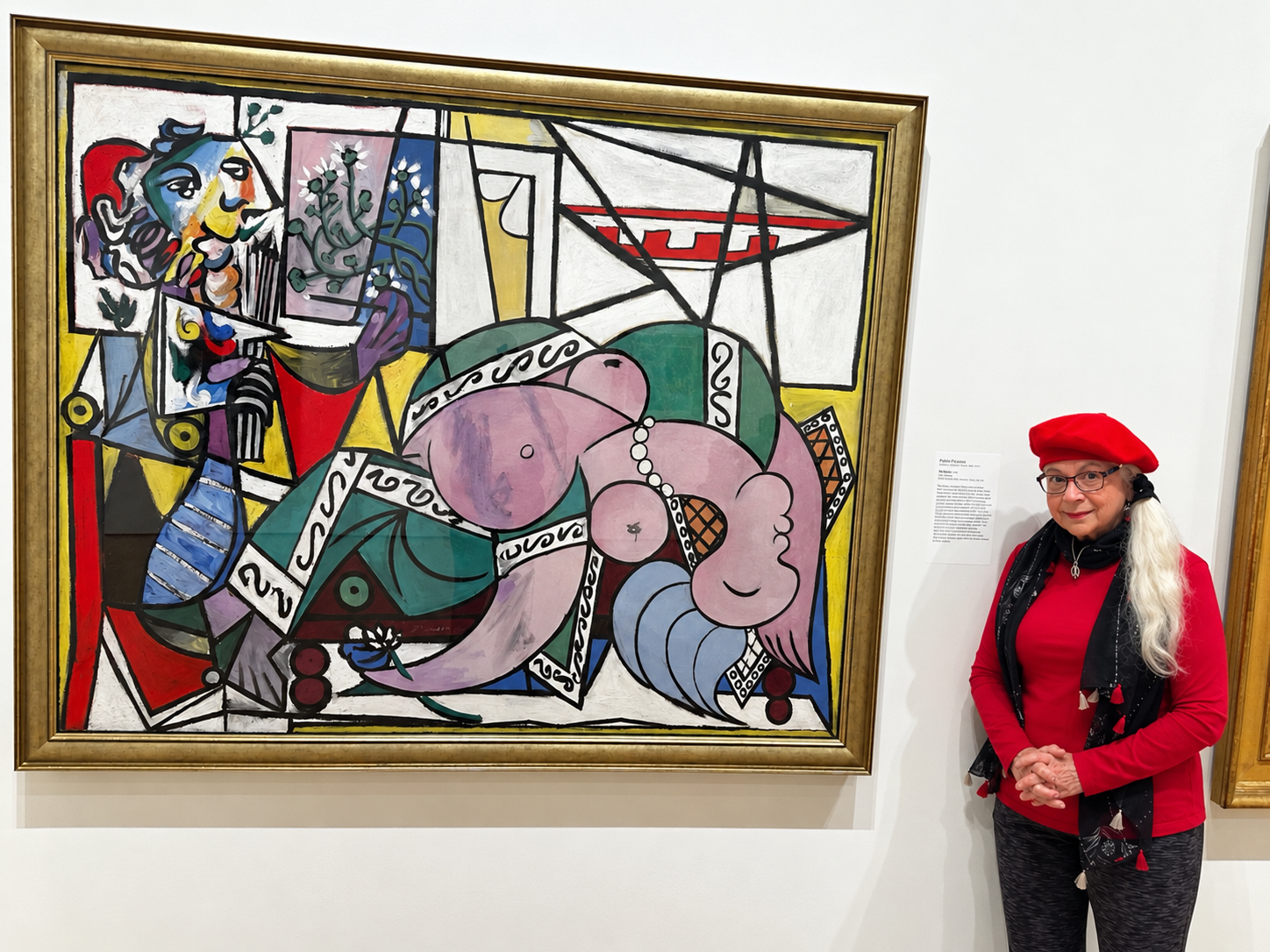
We wandered through galleries featuring works by some of the world’s most recognizable artists. Picasso. Monet. Gustave Caillebotte. And many, many others.
The collection is beautifully curated, with pieces that invite you to stop, look closely, and occasionally wonder what on earth the artist was thinking.
Which, I suppose, is part of the fun of art.
I thoroughly enjoyed it.
But the most interesting discovery of the afternoon wasn’t a Picasso or a Monet.
It was a collection of photographs.
And the people responsible for that collection came from a little Indiana town where we lived for nearly twenty years.
The Extraordinary People We Never Knew
Shelbyville, Indiana.
For nearly two decades, that was our mailing address.
We lived out in the country on five acres, surrounded by neighbors who also had generous pieces of property. We worked, ran our businesses, maintained our home, and went about our lives.
We weren’t particularly involved in the community.
In fact, I couldn’t even have told you the names of all our neighbors.
We were busy doing our thing, and frankly, we were perfectly content doing it.
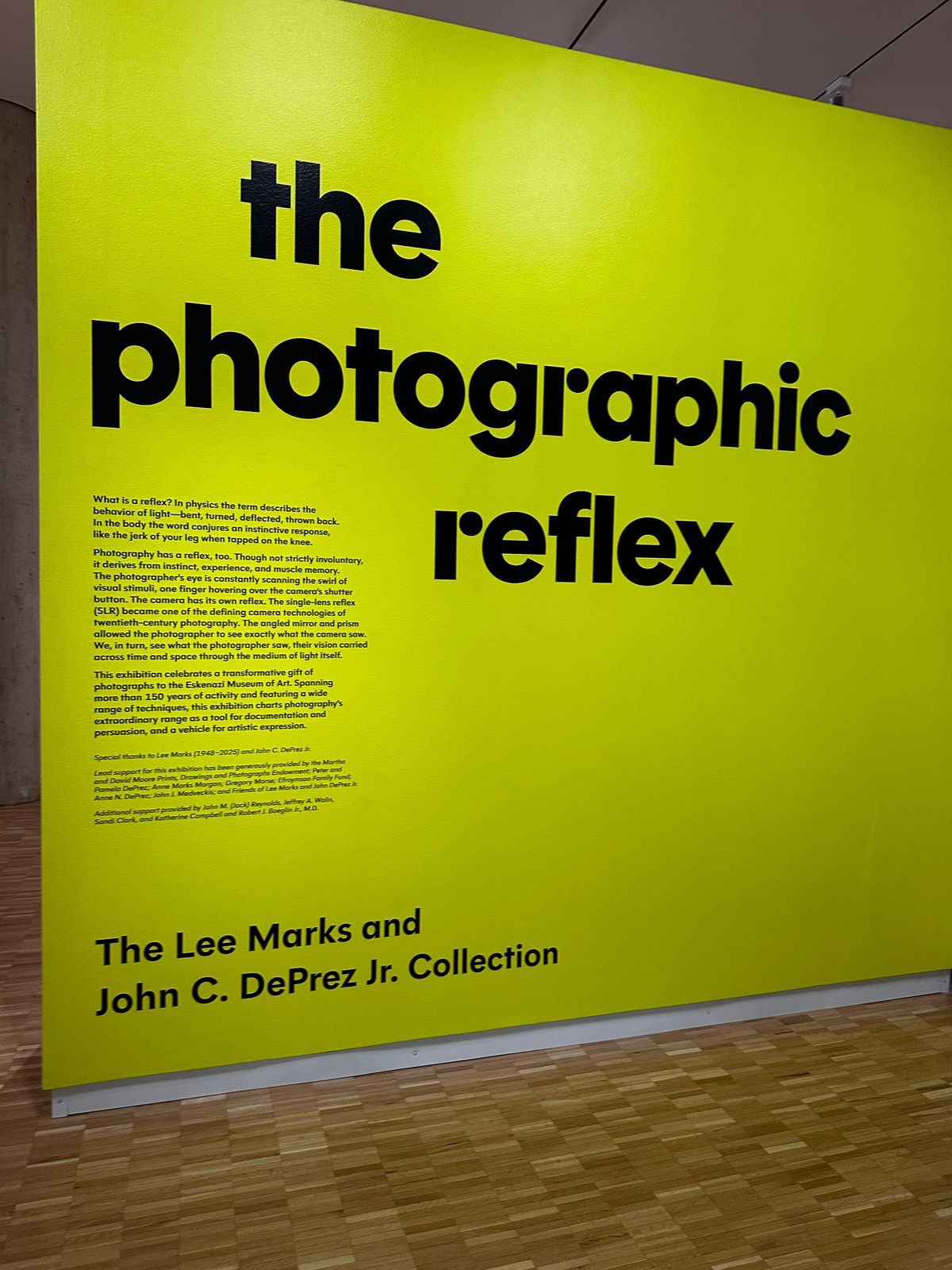
So imagine our surprise when we walked into a gallery at the Eskenazi Museum and discovered an entire exhibition of photographs donated by Lee Marks and John C. DePrez Jr. of Shelbyville, Indiana.
Shelbyville?
Our Shelbyville?
Who were these people?
As it turns out, they were rather extraordinary.
Lee Marks and John DePrez: A Remarkable Legacy
Amelia “Lee” Marks, who died in 2025, was an internationally respected photography dealer, curator, and collector.
Her career connected her with photographers, galleries, collectors, and important figures throughout the art world. Her clientele reportedly included people such as Elton John and Eli Lilly.
She wasn’t simply someone who enjoyed collecting attractive pictures.
She had developed an extraordinary eye for photography as fine art, recognizing its artistic, historical, and cultural significance.
Her husband, John C. DePrez Jr., had his own distinguished career in journalism and publishing, including serving as publisher of The Shelbyville News from 1988 to 1999.
Together, they built an exceptional photography collection.
They began collecting in 1981, long before photography had achieved quite the same mainstream recognition in the fine-art marketplace that it enjoys today.
In 2022, they donated 116 photographs by 80 artists to Indiana University.
The works span more than 160 years, from 1856 to 2017.
The exhibition, titled The Photographic Reflex: The Lee Marks and John C. DePrez Jr. Collection, brings together images that demonstrate the astonishing range of photography as an artistic medium.
Some photographs capture history. Others explore people, places, and the ordinary moments of life. Some are beautiful. Others are provocative, surprising, or unsettling.
And that’s what makes a collection like this so compelling.
A photograph can preserve a moment that would otherwise disappear forever. It can reveal something about the world, or about ourselves, that we might never have noticed.
In 2025, the couple were recognized with the Blue River Community Foundation’s Spirit of Community Award, reflecting their contributions and generosity.
And there we were, standing in a museum gallery, admiring their collection and realizing that for almost twenty years, we’d lived in the same small town without knowing anything about them.
Not a thing.
Which brings me to the part of this story that has stayed with me.
How Much Do We Miss While We’re Busy Living?
I’ve been thinking about this since we left the museum.
How often do we become so absorbed in our own lives that we fail to notice the interesting people, remarkable stories, and unexpected opportunities right around us?
We have our routines.
Our families. Our jobs. Our responsibilities. Our interests.
We travel the same roads, shop at the same stores, talk to the same people, and gradually construct a world that feels familiar and manageable.
There’s nothing inherently wrong with that.
But I wonder how much we miss.
I wonder how many fascinating people lived within a few miles of us in Shelbyville whom we never met.
How many interesting conversations never happened.
How many unexpected friendships never developed.
How many doors remained closed simply because we never thought to knock.
And here’s where this becomes a little more personal.
Because I have to acknowledge something about myself.
Sometimes my isolation has been entirely intentional.
The Difference Between Being Insulated and Being Isolated
I’m quite comfortable spending time alone.
I enjoy my own company. I have plenty of interests, projects, and things that occupy my mind.
I don’t need a packed social calendar to feel that my life is full.
And increasingly, particularly in the political climate we’re living through, I’ve made conscious decisions about the people and environments I want to be around.
I’m simply not interested in spending my leisure time with people who enthusiastically support Donald Trump and the values and behaviors I believe he represents.
That’s not something I’m going to apologize for.
At this stage of my life, I have neither the inclination nor the patience to sit through conversations that normalize cruelty, dishonesty, or the erosion of rights I consider fundamental.
Life is too short.
But here’s the uncomfortable question.
When does protecting your peace become limiting your world?
Because there is a difference between being insulated and being isolated.
Insulation can be healthy. It can protect us from unnecessary conflict, stress, and relationships that drain rather than enrich us.
Isolation, on the other hand, can quietly narrow our experiences.
And the tricky part is that the two can feel remarkably similar.
Both can be comfortable.
Both can be intentional.
Both can give us a sense of control over our lives.
But one protects our well-being while the other may prevent us from discovering things we didn’t even know we were missing.
I suspect I’ve done some of both.
And I suspect I’m not alone.
I’m Not Promising a Personality Transplant
Now, before anyone gets carried away, let me assure you that this is not the beginning of some dramatic personal transformation in which I suddenly become the neighborhood social director.
I’m not planning to organize block parties, join six committees, or start knocking on doors to introduce myself to strangers.
And I am certainly not suggesting that we all need to abandon our boundaries or invite people into our lives whose values are fundamentally incompatible with our own.
At 73, I have a pretty good idea of who I am.
And I rather like her.
But I also believe there’s value in periodically examining the choices we’ve made, even when we have no immediate intention of changing them.
Perhaps awareness is enough to begin with.
Perhaps it’s simply recognizing that every boundary we create has two sides.
It keeps certain things out.
But it may also keep other things from getting in.
And sometimes, those other things are wonderful.
Like an extraordinary photography collection assembled by two remarkable people in a little Indiana town.
People whose lives were far more interesting than we ever imagined.
People we might have enjoyed knowing.
People who were practically in our backyard while we were busy looking elsewhere.
One Last Thought
There’s a certain irony in all of this.
We drove to Bloomington to look at art, and I came home thinking about life.
We admired works by artists whose names are known around the world, but the people who made the greatest impression on us were a couple from Shelbyville.
And a collection of photographs, images created by people who knew how to look closely at the world, reminded me that perhaps I haven’t always looked closely enough at my own.
I’m not sure I’ll change much.
But I might look around a little more.
And perhaps that’s a perfectly good place to start.
After all, you never know what extraordinary people or stories might be hiding in plain sight.
Sometimes they’re halfway around the world.
Sometimes they’re an hour down the road.
And sometimes they’re right next door.
You just have to notice.
Thank you for spending a little of your time with me today. I know there are countless things competing for your attention, and I never take it for granted that you choose to spend a few minutes reading my thoughts, observations, and occasional rants.
If this story resonated with you, I’d love for you to share it with someone who might enjoy it. And if someone forwarded this newsletter to you, I hope you’ll consider subscribing so we can continue the conversation.
Here’s wishing you a wonderful start to another week. May you find something beautiful, something surprising, or someone interesting in a place you least expect.
And may you occasionally remember to look around.
Julie Bolejack, MBA
The Mindful Activist
To subscribe: julies-journal.ghost.io