The Woman Behind the Rape Kit: A Name We Should All Know
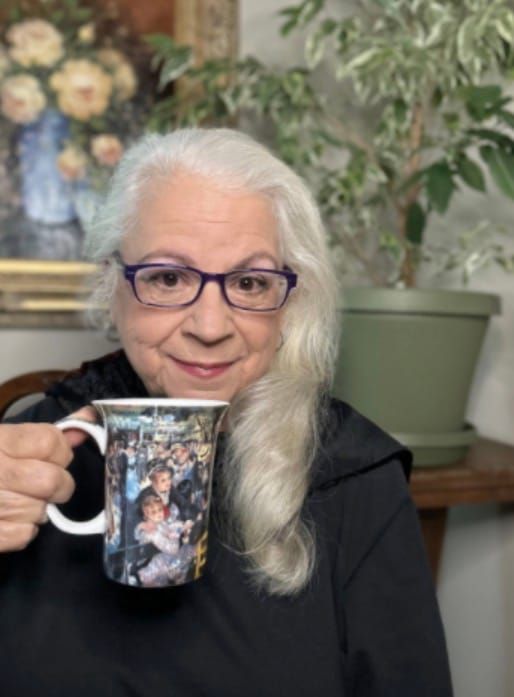
Interrupting my morning coffee to tell you something that you probably did not know, maybe you don’t wanna know…here goes..
I’m going to write about something today that may make a few people uncomfortable.
Good.
Sometimes discomfort is exactly what we need, particularly when it comes from learning something we probably should have known all along.
And I recently learned something that made me stop, shake my head, and wonder how in the world I had managed to live this long without knowing it.
The rape kit was pioneered by a woman, became known by a man’s name, and received funding from Playboy.
Yes. Playboy.
You couldn’t make this stuff up. Well, you could, but somebody would probably reject the screenplay for being too ridiculous.
And yet, here we are.
Her name was Martha “Marty” Goddard.
I’d never heard of her. Had you?
I suspect most of us haven’t, and that bothers me.
Because this woman deserves a place in American history, and certainly in the history of women’s rights.
A Woman Who Saw What Everyone Else Was Willing to Ignore
In the 1970s, Martha Goddard was working in Chicago when she became increasingly disturbed by the way sexual assault victims were treated.
Imagine being a woman who had just experienced one of the most terrifying and violating events imaginable.
You summon the courage to report it. You go to the hospital. You submit to an invasive examination. You answer questions that no one should ever have to answer.
And after all of that?
The evidence might not even be properly collected.
Or preserved.
Or documented.
Or used.
Apparently, the system had plenty of procedures for questioning women but hadn’t quite gotten around to developing consistent procedures for collecting the evidence that might help establish what happened.
Goddard decided that wasn’t acceptable.
She helped develop a standardized sexual assault evidence collection kit, providing medical professionals with the materials and instructions needed to collect and preserve forensic evidence.
It was practical. It was necessary. And it was an important advancement in the investigation of sexual violence.
But inventing something useful and getting powerful institutions to embrace it are two entirely different accomplishments.
Especially when you’re a woman trying to convince male-dominated institutions to change.
And Then Along Came a Man’s Name
Louis Vitullo, an official with the Chicago police crime laboratory, contributed to the kit’s early development.
And the kit became widely known as the Vitullo kit.
Not the Goddard kit.
The Vitullo kit.
Now, to be fair, the historical account is more complicated than some man simply swooping in and stealing a woman’s invention.
Goddard reportedly understood that associating the kit with Vitullo would help gain the cooperation of the police and other institutions whose support she needed.
In other words, she was pragmatic.
She wanted the system to work.
She wanted women to have access to better forensic examinations.
She wanted evidence collected and preserved.
And if attaching a man’s name to her work helped accomplish those goals, she was willing to make that compromise.
Think about the implications of that.
A woman working to help victims of sexual violence apparently recognized that her work might be taken more seriously if it carried a man’s name.
If that doesn’t tell us something about the world women were navigating, I’m not sure what does.
And before anyone dismisses this as ancient history, I’d suggest we remember that the 1970s weren’t exactly the Middle Ages.
Some of us were already paying mortgages and raising children.
Now Comes the Part You Really Couldn’t Invent
Goddard needed money to help distribute the kits and make the program successful.
And one of the organizations that provided financial support was the Playboy Foundation.
Yes, the philanthropic organization associated with Hugh Hefner’s Playboy empire.
The same empire that made a fortune selling images of women’s bodies helped finance a tool intended to improve the investigation of crimes committed against those bodies.
Well, there’s a sentence I never expected to write.
To be fair, the Playboy Foundation supported a variety of civil liberties and social causes. Its involvement wasn’t entirely out of character.
But the irony is still breathtaking.
A woman pioneered the effort.
A man’s name became attached to it.
And Playboy helped pay for it.
Ladies, if you’re looking for a concise illustration of the contradictions surrounding women’s place in American society, I think we’ve found ourselves a winner.
But Here’s Where the Story Stops Being Ironic
Because nearly fifty years later, we are still dealing with something that should outrage every one of us.
Untested sexual assault evidence kits.
Thousands upon thousands of them have been discovered in police evidence rooms and storage facilities across this country.
Some sat for years.
Others for decades.
Think about that.
A woman survives a sexual assault.
She reports it.
She submits to an intimate, invasive medical examination.
She allows strangers to collect evidence from her body.
She cooperates with investigators.
She does everything the system asks her to do.
And then the evidence may sit in a box on a shelf.
For years.
I realize that not every collected kit necessarily requires DNA testing in every circumstance. Investigations differ, and forensic decisions can be complicated.
But widespread backlogs of neglected evidence are not simply paperwork problems.
They raise a far more troubling question.
How seriously were these women and their experiences being taken?
We hear a great deal about encouraging victims to come forward.
We tell women to report sexual violence.
We tell them to trust the system.
But trust is supposed to be a two-way street.
And when evidence is allowed to languish for years, what message does that send to the person who endured the examination in the first place?
What message does it send to the next woman who must decide whether to report an assault?
This Is About More Than a Forgotten Woman
I keep coming back to Martha Goddard.
Here was a woman who recognized a serious institutional failure and did something about it.
She didn’t just complain.
She developed a practical solution.
She worked to persuade reluctant institutions.
She helped secure financial support.
And she prioritized the needs of sexual assault survivors over receiving personal recognition.
That’s leadership.
That’s determination.
And that’s a woman whose name we should know.
In 2022, the Smithsonian’s National Museum of American History acquired an early sexual assault evidence collection kit, an important step in preserving this history and recognizing Goddard’s contribution.
I’m grateful for that.
But I can’t help wondering how many other women have made extraordinary contributions to medicine, science, public safety, and social progress, only to have their accomplishments minimized, overlooked, or credited to someone else.
How many women did the work while somebody else got the headline?
How many decided that getting something accomplished was more important than fighting to have their names attached to it?
And how many of those decisions were made not because the women lacked ambition, but because they understood exactly how power worked?
We Owe Her More Than a Footnote
I don’t believe honoring Martha Goddard requires diminishing the contributions of the men who worked alongside her.
History is rarely that simple.
But I do believe we should tell the story accurately and make certain that the woman whose determination helped change sexual assault investigations receives the recognition she deserves.
And I believe we owe something to the survivors whose evidence was collected but not properly pursued.
We owe them accountability.
We owe them serious investigations.
And we owe them a justice system that treats sexual violence as something more than an unfortunate inconvenience.
There is something deeply unsettling about the fact that a woman had to work so hard to establish a standardized system for collecting sexual assault evidence, only for later generations to discover that so much of that evidence had been left untested.
We can celebrate progress without pretending the work is finished.
And we can acknowledge the uncomfortable contradictions of our history without looking away from them.
So today, I’m adding a name to my own mental list of women I wish I’d learned about decades ago.
Martha “Marty” Goddard.
Not because she sought fame.
Not because she demanded recognition.
But because she saw women being failed by a system and decided to do something about it.
And perhaps that’s the question I want to leave you with today:
How many extraordinary women have we never heard of simply because history was better at remembering the men around them?
I suspect the answer would make us all a little uncomfortable.
And perhaps it should.
A Personal Note
Thank you for spending part of your day with me here at Julie’s Journal.
I know today’s subject isn’t lighthearted, and it certainly isn’t one of my usual stories designed to give us a good laugh. But I believe there are times when we need to use our voices to recognize people who made a difference, particularly those whose contributions have been overlooked.
If this story taught you something you didn’t know, I hope you’ll share it. Martha Goddard deserves to be remembered, and her story deserves to be told.
And if someone forwarded this journal to you, I hope you’ll consider subscribing. We cover a little bit of everything here—life, memories, humor, the occasional absurdity, and sometimes the things that simply need to be said.
Wishing you a thoughtful and meaningful start to another week.
Julie Bolejack, MBA
The Mindful Activist
Subscribe here: julies-journal.ghost.io