When the Technology We Depend On Stops Working
Julie’s Journal | Wednesday, November 18, 2026
I’ve spent a good part of my life working with technology. I’ve watched it evolve from enormous computers occupying entire rooms to devices we carry in our pockets that can accomplish things we couldn’t have imagined a few decades ago.
And I have to tell you, lately I’ve been wondering whether we’ve created a world that is becoming too dependent on technology we can’t always keep running.
Look at what’s happened just in the past week.
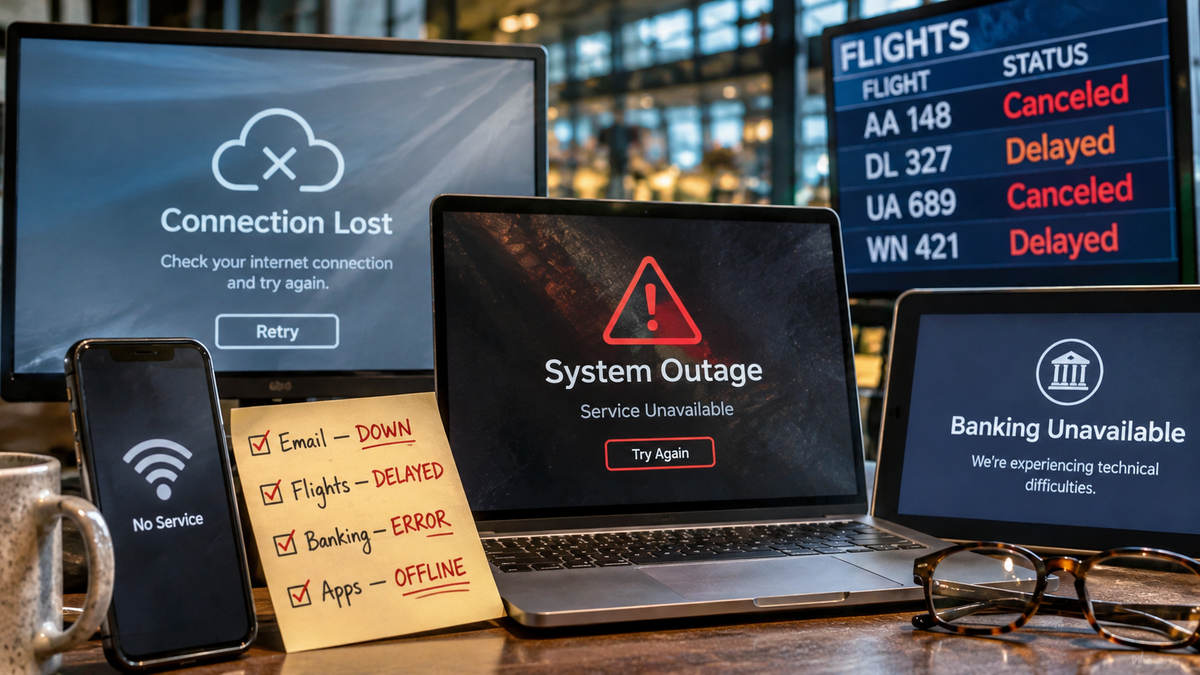
Microsoft experienced a major outage affecting Outlook, Teams, and other services. Businesses and organizations around the world suddenly found themselves unable to communicate or conduct normal operations.
Then came serious problems with our aviation systems.
A Federal Aviation Administration technology failure disrupted air travel across the United States, contributing to thousands upon thousands of canceled flights. Passengers were stranded, schedules collapsed, and the consequences continued long after the original problem was resolved.
United Airlines experienced its own computer problems, temporarily halting departing flights.
JPMorgan Chase reported transaction-processing difficulties caused by a software bug.
Think about that for a moment.
Our communications, our transportation systems, and our financial institutions all experienced significant technological disruptions within days of one another.
And these problems aren’t confined to the United States.
Around the world, governments and businesses are confronting cyberattacks, software vulnerabilities, and disruptions to essential infrastructure.
In France, cyberattacks have targeted supermarket refrigeration systems. North Korean hackers have been implicated in enormous cryptocurrency thefts. Security researchers are identifying serious vulnerabilities in software used by websites across the globe.
Some of these incidents are deliberate attacks. Others are ordinary technical failures with extraordinary consequences.
And that’s an important distinction. There is no credible evidence that all these recent outages are part of some coordinated global cyberattack.
But does that really make us feel much better?
We’ve built an interconnected world in which a single technological failure can affect millions of people who have absolutely no control over the system that failed.
Consider how much of our daily lives depends on technology functioning exactly as intended.
We depend on it to access our money, communicate with our families, receive medical care, travel, operate businesses, purchase groceries, and increasingly even enter our own homes.
We have moved so much of our lives into digital systems that when those systems fail, we sometimes have no practical alternative.
And artificial intelligence is adding another dimension to this vulnerability.
AI offers extraordinary possibilities. It can help identify software weaknesses, improve security, accelerate medical research, and solve complex problems.
But it can also help malicious actors discover vulnerabilities and develop more sophisticated attacks.
We are racing forward technologically, and I’m not entirely convinced that our safeguards, infrastructure, and contingency plans are keeping pace.
Perhaps what concerns me most isn’t that technology occasionally fails.
Of course it fails. It always has.
What concerns me is how much more consequential those failures have become.
There was a time when a computer malfunction meant somebody couldn’t print a report.
Today, it can mean thousands of airplanes don’t fly.
I don’t believe the answer is to retreat from technology. That would be neither realistic nor desirable.
But perhaps it’s time to ask some harder questions about redundancy, accountability, infrastructure investment, and what happens when the systems we take for granted simply stop working.
Because technological progress should make our lives more secure, not leave us increasingly vulnerable to a malfunctioning router or a poorly executed software update.
And now, for some truly important international news…
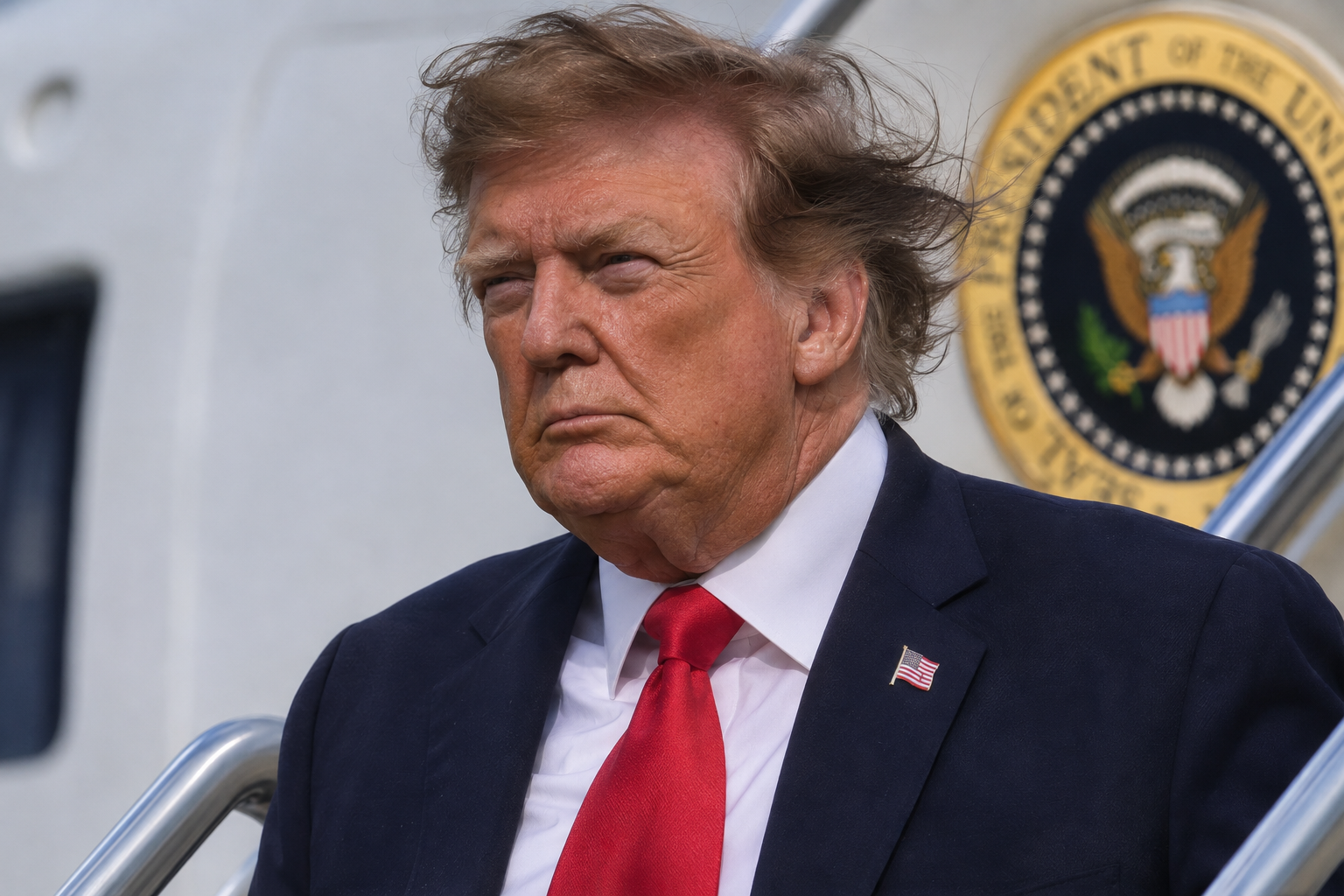
President Trump has arrived in the Philippines on his way to high-level meetings involving some of the world’s most powerful leaders, including China’s Xi Jinping and potentially Russia’s Vladimir Putin.
There are enormous issues at stake: global security, economic competition, international alliances, and the increasingly complicated relationships among nuclear powers.
But apparently, somewhere between Washington and Manila, something else of considerable international significance occurred.
The president’s hair got darker.
Yes. Photographs from his arrival show a noticeably darker, fuller-looking hairstyle.
Whether someone applied hair dye, performed some midair styling magic, or simply persuaded a few stubborn follicles to cooperate remains a mystery.
And I suppose we should celebrate the fact that, amid malfunctioning computer systems, grounded airplanes, banking disruptions, and geopolitical uncertainty, at least one apparent technological achievement has gone according to plan.
The presidential hair transformation.
Perhaps we should send whoever was responsible over to the FAA.
They seem to know how to make a major change without grounding the entire country.
Until Friday,
Julie Bolejack, MBA
The Mindful Activist
To subscribe: julies-journal.ghost.io