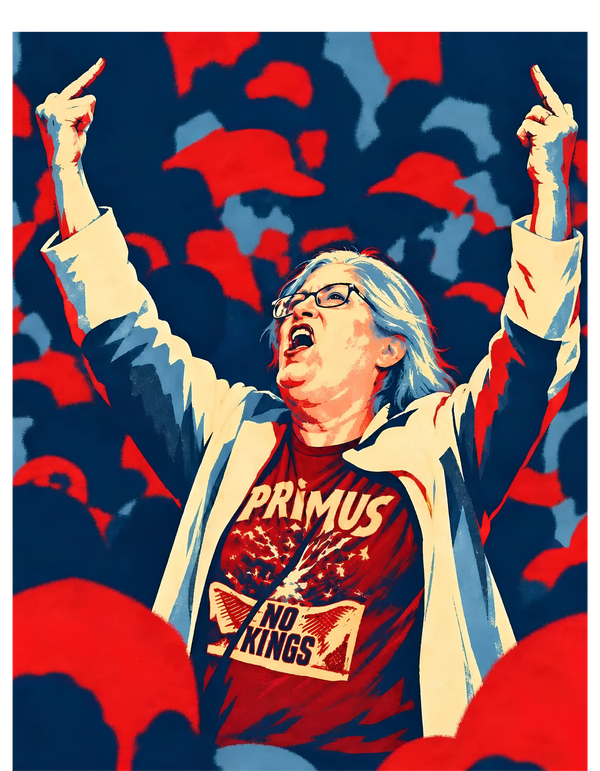
Moral Depravity
Julie’s Journal | Friday, October 23, 2026
There are two words that have been occupying an increasingly large space in my mind.
Moral depravity.
Not political disagreement. Not differences in philosophy. Not competing visions for the future of this country.
Moral depravity.
I find myself returning to those words almost daily as I watch what is happening in the United States under Donald Trump and his administration.
And I have reached the point where I am no longer willing to soften my language to accommodate the sensitivities of people who continue to defend, excuse, rationalize, or simply look away from what is happening.
There comes a time when calling something outrageous is insufficient.
When calling it troubling is an insult to the gravity of the situation.
When describing it as controversial is itself a form of normalization.
We have reached that time.
Let’s call it what it is.
This week, American special envoy Steve Witkoff traveled to Russia, where the release of American citizen Stephen Hubbard was announced.
Hubbard had spent more than four years in Russian captivity. His release is welcome news. Every American unjustly imprisoned abroad deserves the full efforts of our government to bring them home.
But Witkoff publicly praised Vladimir Putin for his humanitarian gesture.
Humanitarian.
Vladimir Putin.
The man whose invasion of Ukraine has brought death, destruction, displacement, and unimaginable suffering to millions of innocent people.
A man whose military has attacked Ukrainian cities, hospitals, and civilian infrastructure.
A man whose government imprisoned the very American whose release was being celebrated.
And an American representative stands before the world praising his humanitarianism.
Moral depravity.
Not because an American was freed. That is something to celebrate.
But because we have reached a place where representatives of the United States can flatter a brutal authoritarian leader while the suffering caused by that leader continues.
And somehow we are expected to treat this as ordinary diplomacy.
I refuse.
Look at what is happening in our own streets.
Look at the immigration enforcement operations taking place across this country.
Look at the videos. The confrontations. The frightened families. The people taken into custody.
Look at the documented cases involving American citizens who have been mistakenly detained or subjected to immigration enforcement.
Look at what happens when an administration treats human beings as statistics, targets, and opportunities for political theater.
And then look inside the detention facilities.
An investigation by the Associated Press and KFF Health News documented allegations of serious medical neglect across immigration detention facilities in at least 33 states.
People reported being denied necessary medications. Infections went untreated. Serious illnesses worsened. Desperate requests for medical assistance went unanswered.
These are allegations documented in legal proceedings, not findings that every facility or employee has committed the same abuses.
But the sheer breadth of the reports demands accountability.
A government that takes away a person’s freedom assumes responsibility for that person’s basic safety and medical care.
That obligation does not disappear because someone crossed a border unlawfully.
It does not disappear because someone lacks citizenship.
It does not disappear because the person speaks another language or comes from another country.
Human dignity is not a privilege bestowed by immigration status.
And when suffering becomes an acceptable cost of demonstrating political toughness, I have two words for it.
Moral depravity.
And then there are the lies.
The relentless, shameless, repeated lies.
Remember the claim that Haitian immigrants in Springfield, Ohio, were eating people’s cats and dogs?
There was no credible evidence supporting it.
It did not matter.
The allegation was broadcast to millions of Americans, turning an immigrant community into a target of suspicion and fear.
Remember the repeated claims that undocumented immigrants are voting in massive numbers and stealing American elections?
Study after study, investigation after investigation, has shown that noncitizen voting in federal elections is exceedingly rare.
It does occur, but there is no credible evidence that it has occurred on a scale capable of changing the outcome of a national election.
Yet the narrative persists.
Because the point is not necessarily to establish the truth.
The point is to create an enemy.
To manufacture fear.
To persuade Americans that their neighbors are dangerous, their elections are illegitimate, and only one political leader can save them.
There is something profoundly immoral about deliberately exploiting people’s fears while undermining their ability to distinguish truth from fiction.
A lie repeated from the highest office in the country does not become less dangerous because millions of people believe it. It becomes more dangerous.
And when political leaders know the evidence contradicts their claims and continue spreading them anyway, what should we call that?
Moral depravity.
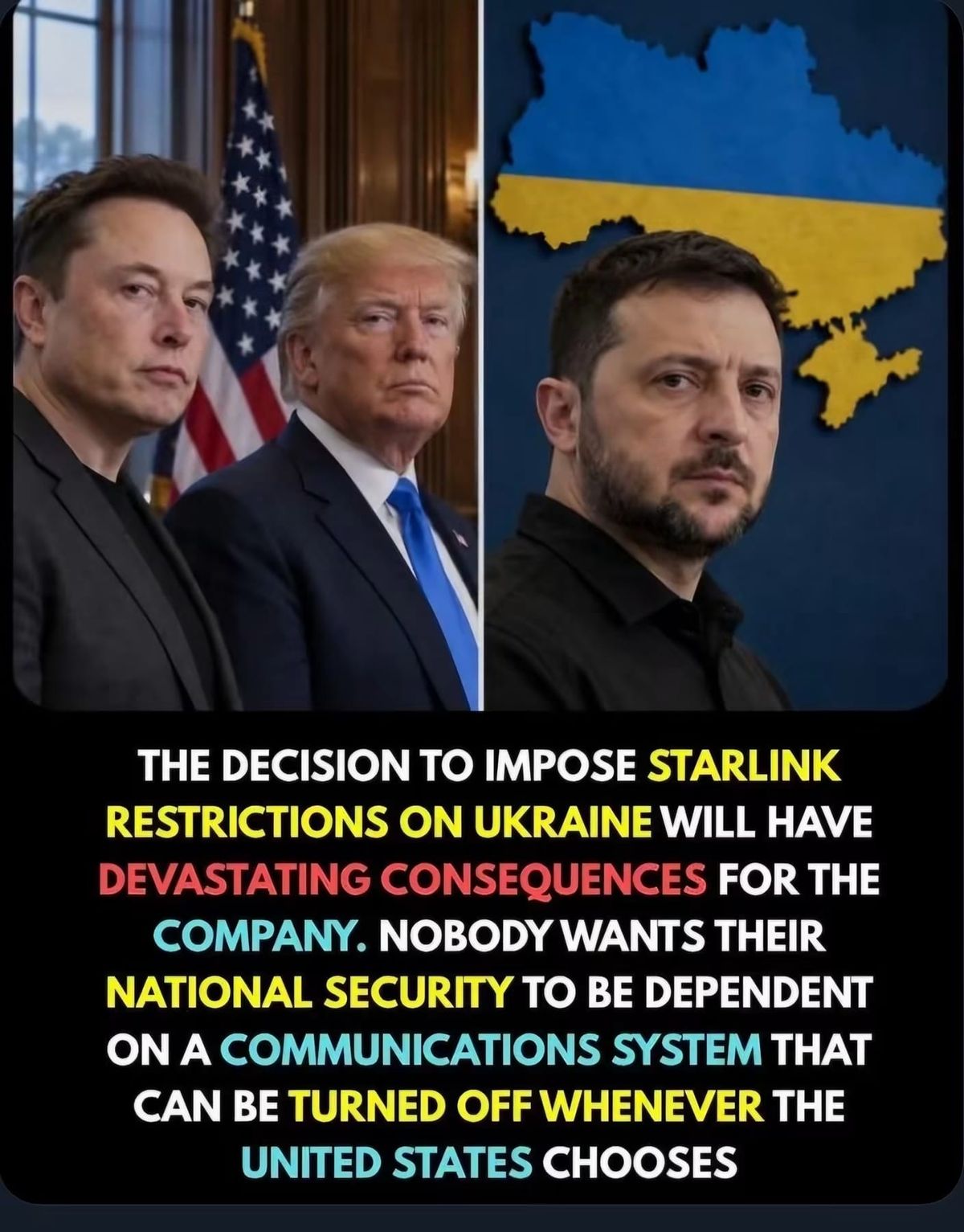
And Ukraine. My God, Ukraine.
I remember when Americans across the political spectrum understood that a sovereign nation being invaded by a more powerful neighbor was something to condemn.
I remember when defending democracy against authoritarian aggression was considered an American principle, not a partisan preference.
And now?
We have watched an American administration pressure Ukraine, suspend military assistance, temporarily halt intelligence sharing, and pursue negotiations with Russia that initially excluded the country Russia invaded.
We watched the United States vote against a United Nations resolution supporting Ukraine’s territorial integrity.
We have watched the language of American leadership shift in ways that repeatedly benefit Moscow’s position.
That does not mean every diplomatic negotiation is a betrayal, or that seeking an end to the war is wrong.
Of course the war should end.
But peace that rewards aggression and leaves the victim vulnerable to another invasion is not a moral victory.
And there is something deeply disturbing about watching the United States treat a nation fighting for its survival as though it were an inconvenience to be managed.
The aggressor is not the victim. The invaded country is not responsible for the invasion.
These distinctions should not require courage to articulate.
Yet apparently, in America today, they do.
The list does not end there.
Consider what we have witnessed and what we are being asked to accept:
- The demonization of immigrants, in which entire communities are characterized as threats rather than individuals entitled to dignity and due process.
- The erosion of accountability, as government officials resist scrutiny and transparency is treated as an obstacle rather than a democratic obligation.
- The normalization of cruelty, where the suffering of vulnerable people becomes a political selling point.
- The assault on factual reality, where demonstrably false claims are repeated until public confusion itself becomes politically useful.
- The attacks on independent institutions, as judges, journalists, universities, and public servants are vilified when they challenge presidential power.
- The abandonment of democratic principles, whenever loyalty to one man is treated as more important than loyalty to the Constitution.
- The willingness to excuse authoritarian behavior, whether it occurs abroad or is increasingly tolerated here at home.
These are not merely differences over tax rates, government spending, or regulatory policy.
They concern the moral obligations of people entrusted with enormous power.
They concern whether the United States still recognizes that power must have limits, truth must matter, and every human being possesses inherent worth.
And now we must talk about the enablers.
Because Donald Trump does not govern alone.
He has an administration.
He has a political party.
He has members of Congress who possess constitutional authority and responsibility to hold the executive branch accountable.
He has supporters who continue to cheer.
And he has people who privately express discomfort but publicly remain silent.
I understand that Americans have different political priorities.
I understand that some people voted for Trump because of inflation, immigration, taxes, or dissatisfaction with the previous administration.
But there comes a point when those explanations are no longer sufficient.
There comes a point when supporting a political agenda requires confronting the moral cost of the methods used to advance it.
You cannot indefinitely separate the policies you like from the conduct you are willing to excuse.
You cannot claim to value constitutional government while dismissing threats to constitutional safeguards.
You cannot profess reverence for human life while shrugging at preventable human suffering.
And you cannot repeatedly defend cruelty and expect the rest of us to pretend that your defense carries no moral responsibility.
I am not suggesting that every Republican or every Trump voter is morally identical.
I am saying that those who knowingly defend, enable, or excuse abuses of power bear responsibility for that choice.
And those who hold positions of authority bear an even greater responsibility.
Silence in the face of wrongdoing is not always neutrality. Sometimes it is permission.
The danger is what we become accustomed to.
Perhaps this is what troubles me most.
Not simply the individual incidents, although many are appalling.
It is the accumulation.
The repetition.
The steady erosion of our capacity to be shocked.
Something happens on Monday that would once have dominated national conversation for weeks.
By Wednesday, something worse has replaced it.
By Friday, we are arguing over whether the first incident even mattered.
And slowly, almost imperceptibly, our standards change.
We begin accepting behavior that would once have been disqualifying.
We lower our expectations of public officials.
We become exhausted by the sheer volume of misconduct and controversy.
We stop demanding explanations.
We stop expecting consequences.
We stop being surprised.
And that is how a country loses its moral bearings.
Not necessarily in one dramatic moment.
But through a thousand smaller accommodations.
A thousand rationalizations.
A thousand occasions when decent people decide that speaking up is simply too exhausting.
I do not believe outrage alone is sufficient. It must be accompanied by facts, accountability, lawful action, and the determination to defend democratic institutions.
But I also believe there is a place for moral outrage.
There are circumstances in which anger is not evidence of irrationality.
It is evidence that your conscience is still functioning.
I will not normalize this.
I will not pretend that every political action deserves to be evaluated as though it were merely another legitimate difference of opinion.
I will not confuse civility with silence.
I will not make myself more comfortable by choosing gentler language for conduct that deserves condemnation.
And I will not accept the proposition that loving my country requires defending its government.
Sometimes loving your country means standing in fierce opposition to the people governing it.
Sometimes patriotism means insisting that the principles written into our founding documents must apply even when doing so is politically inconvenient.
Sometimes it means saying, plainly and without apology, that what is happening is wrong.
And sometimes the appropriate words are the strongest ones available.
Moral depravity.
I know those words will make some people uncomfortable.
Good.
Perhaps discomfort is exactly what we need.
Because what should frighten us is not the strength of the language used to condemn wrongdoing.
What should frighten us is how much wrongdoing we have learned to tolerate without using strong language at all.
We are not required to surrender our moral judgment simply because the behavior comes from the president of the United States.
In fact, that is precisely when our moral judgment matters most.
The presidency is not a moral exemption. Political loyalty is not a moral exemption. And silence is not a moral exemption.
I am ending this week with two words.
I wish I weren’t.
But until we stop normalizing what should never have become normal, I intend to keep saying them.
Loudly.
Clearly.
Without apology.
Moral depravity.
Thank you, as always, for spending part of your week with me.
I know this was not a comfortable journal to read. It wasn’t a comfortable one to write, either. But I believe there are times when remaining quiet would be far more troubling than speaking out.
If these words resonate with you, please share this journal. Encourage others to subscribe. Independent voices matter, especially when the pressure to look away is so strong.
I hope you have a peaceful weekend. And I hope that, whatever our political differences, we never lose the courage to recognize cruelty, dishonesty, and injustice for what they are.
Julie Bolejack, MBA
The Mindful Activist
Subscribe at julies-journal.ghost.io