Never Quit - Inspiration
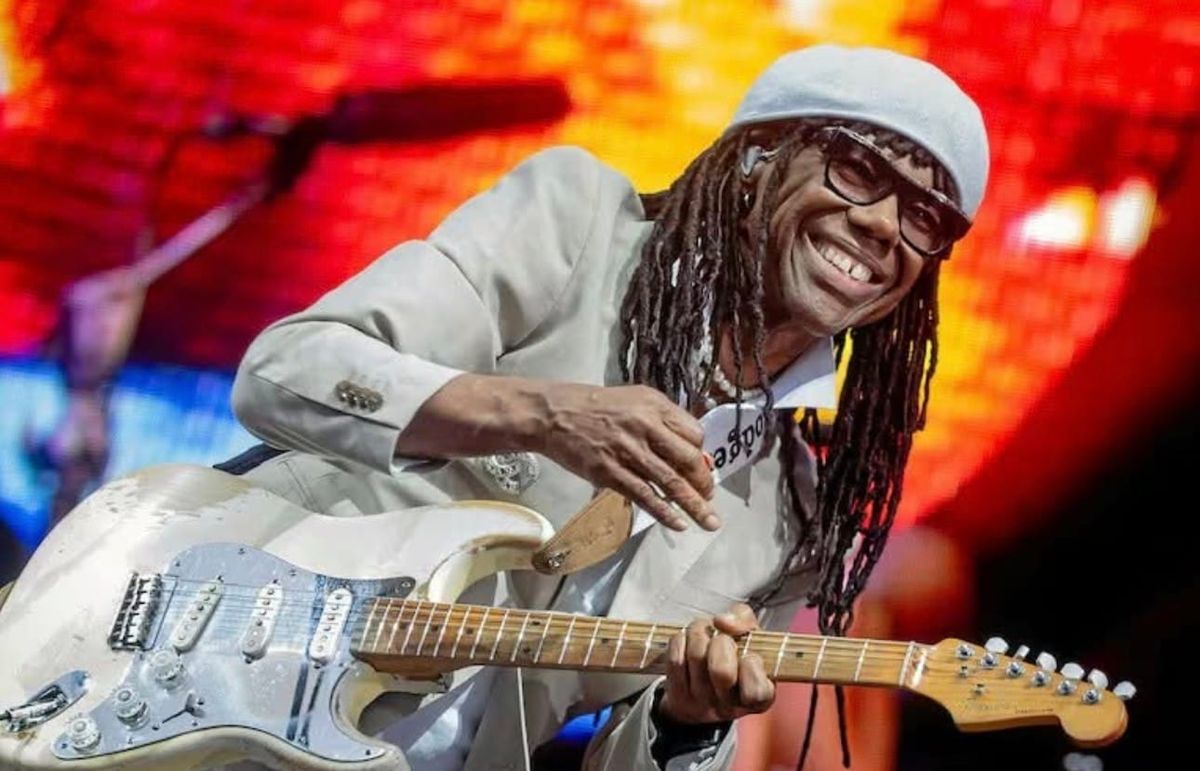
Yes, I took this from Facebook. Please enjoy! 😀
Atlantic Records made billions from his songs. He grew up in a house full of heroin addicts and was homeless by 15.
A kid raised by junkies and beatniks in Greenwich Village became the most prolific hitmaker in modern music history.
Nile Rodgers was 25 years old.
Standing in the snow outside Studio 54 on New Year's Eve 1977, wearing a two-thousand-dollar suit with his partner Bernard Edwards.
Grace Jones had invited them personally. Told them to come to the back entrance. Say her name at the door.
They said her name.
The doorman slammed the door in their faces.
The hottest nightclub on Earth had just told the founders of Chic they weren't cool enough to get inside.
A year earlier, Nile Rodgers had nothing.
Born September 19, 1952, in New York City.
His mother, Beverly, got pregnant with him at 13 years old. Thirteen. A child raising a child.
His biological father, Nile Rodgers Sr., was a percussionist specializing in Afro-Cuban rhythms. He was rarely around. Suffered from debilitating mental illness. Rodgers would sometimes see his father living on the streets.
His stepfather, Bobby Glanzrock, was white, Jewish, and sold heroin to support his habit.
Everyone in the house was an addict. His mother. His father. His stepfather. Eventually, all five of his half-brothers.
Every single one of them became heroin addicts. Every one except Nile.
Richard Pryor visited their apartment. Thelonious Monk. Lenny Bruce. The living room in Greenwich Village was a rotating door of jazz legends, Beat poets, and junkies.
"Shooting, drinking, snorting and smoking any and everything right in front of me was all part of the daily script," Rodgers wrote in his memoir.
He started using drugs at 11.
At eight years old, he talked his own father down from jumping off a fourth-floor ledge.
His mother was committed to psychiatric care after trying to hurt his younger brother during a bout of postpartum depression. Nile was shipped off to live with his grandmother.
He had severe asthma. Spent much of his fifth and sixth years in a convalescent home under oxygen tents.
He was sexually abused by the home's caretaker.
By 15, he was homeless. Bouncing between relatives in New York and Los Angeles. Sleeping rough. Panhandling in ten languages, including sign language, taught to him by a hippie guru he met on the street.
Everyone said the same thing.
"He's a junkie's kid. Same ending."
"That boy's going to end up just like his mother."
"No future. No discipline. No home."
"Another throwaway kid from the Village."
He didn't listen.
Here's what Nile knew that everyone else missed:
The same house that was full of heroin addicts was also full of the greatest music ever recorded. Miles Davis. Monk. Bebop. Afro-Cuban rhythms. The chaos was the classroom.
So he picked up a guitar at 16.
Before that, he'd already mastered the clarinet and flute. Could play most orchestral instruments by 14. But the guitar impressed girls. So he chose the guitar.
At 19, he joined the house band at the Apollo Theatre in Harlem. Backed Aretha Franklin. Parliament-Funkadelic. Played on Sesame Street for PBS.
Then in 1970, he met a bass player named Bernard Edwards.
They clicked instantly. Formed the Big Apple Band. Backed a vocal group called New York City.
When that group fizzled, Rodgers and Edwards decided to build something of their own.
Inspired by Roxy Music's image and KISS's anonymity, they formed Chic.
Their first single, "Dance, Dance, Dance (Yowsah, Yowsah, Yowsah)," featured an unknown session vocalist named Luther Vandross.
It hit.
Atlantic Records signed them.
But here's the part nobody talks about.
They got a record deal. They had a hit on the radio. And Studio 54 still wouldn't let them through the door.
New Year's Eve. 1977. Grace Jones. The back entrance. Two-thousand-dollar suits soaked in snow.
The doorman didn't care.
Rodgers and Edwards walked back to Edwards' apartment. Popped two bottles of Dom Perignon.
And started writing a song called "F* Off."
Seven minutes of pure rage aimed at a bouncer.
Edwards thought they couldn't say that on the radio. They changed it to "Freak Off."
That sounded terrible.
So they changed it to "Freak Out."
That's when everything changed.
"Le Freak" became Atlantic Records' best-selling single in the label's history. Seven million copies sold. Number one on the Billboard Hot 100 for six weeks. Number one on the disco and R&B charts for seven weeks.
In 2018, the Library of Congress preserved it in the National Recording Registry as "culturally, historically, or aesthetically significant."
A year later, their follow-up "Good Times" hit number one on both the pop and soul charts.
It became one of the most sampled songs of all time. The Sugarhill Gang used it for "Rapper's Delight." The bassline helped launch hip-hop.
But Nile wasn't done.
He wrote "We Are Family" for Sister Sledge. "I'm Coming Out" and "Upside Down" for Diana Ross. "He's the Greatest Dancer."
Hit after hit after hit. All in a two-year window.
Then on July 12, 1979, fifty thousand people showed up to Comiskey Park in Chicago for Disco Demolition Night.
A radio DJ named Steve Dahl blew up a crate of disco records on a baseball field between games. The crowd rioted. The field was destroyed. The White Sox forfeited the game.
Rodgers watched the footage the next day.
"It felt to us like a Nazi book burning."
Overnight, disco was dead. Radio stations pulled disco from rotation. Record labels dropped disco acts. Chic never had another chart hit.
"After 1979 we never had another hit record again," Rodgers said. "We went from 1979 all the way to 1983 doing nothing but flops."
Four years. Five consecutive failures. The phone stopped ringing.
The man behind Atlantic Records' biggest single couldn't get arrested.
Then one night in 1982, Rodgers was out at a club called the Continental in New York with Billy Idol.
David Bowie slid onto the barstool next to him.
They talked about jazz, soul, and R&B until 5:30 in the morning.
Bowie wanted Rodgers to produce his next album.
Rodgers hesitated. The word "dance" was loaded for him now. Post-traumatic stress from Disco Demolition.
He said yes anyway.
Let's Dance sold over 10 million copies worldwide. Billboard named Rodgers the Number One Singles Producer of the Year.
The phone started ringing again.
Madonna called. Rodgers produced Like a Virgin. Over 21 million copies sold. "Like a Virgin" and "Material Girl" both went to number one.
Then Duran Duran. INXS. Mick Jagger. Grace Jones. Bryan Ferry. Jeff Beck. Rod Stewart. Diana Ross again. Robert Plant. Debbie Harry. Peter Gabriel.
In 2010, Rodgers was diagnosed with aggressive prostate cancer.
He flew to Italy for a show before he let himself process it. Because Nile Rodgers doesn't cancel shows.
He had a radical prostatectomy. Kept working through recovery.
One year after surgery, Daft Punk called.
They wanted his guitar. His ear. His genius.
Rodgers co-wrote and played on "Get Lucky" with Pharrell Williams. The song hit number one in dozens of countries.
At the 2014 Grammy Awards, Rodgers won three trophies. Record of the Year. Album of the Year. Best Pop Duo/Group Performance.
In July 2013, he announced he was cancer free.
Today, Nile Rodgers has written, produced, or performed on records that have sold more than 750 million albums and 100 million singles worldwide.
He's been inducted into the Rock and Roll Hall of Fame. The Songwriters Hall of Fame. Won the Polar Music Prize in 2024.
He co-wrote "Cuff It" for Beyoncé's Renaissance album.
He co-founded the We Are Family Foundation with his partner Nancy Hunt, a nonprofit that mentors young people around the world.
An asteroid 300 million miles from Earth was named after him. Asteroid 191911 Nilerodgers.
He headlines Glastonbury. Fills arenas. Plays 100,000-person crowds on the Pyramid Stage.
The kid who was homeless at 15. Whose mother got pregnant at 13. Whose father lived on the streets. Whose entire family shot heroin. Who was sexually abused in a children's home. Who was turned away from Studio 54 on New Year's Eve.
He turned that rejection into the best-selling single in Atlantic Records history.
All because a 25-year-old kid from a house full of addicts refused to let a doorman decide his legacy.
He turned a slammed door into "Le Freak."
He turned a Nazi-style record burning into the biggest production career of the 1980s.
He turned a cancer diagnosis into three Grammy Awards with Daft Punk.
He proved that the kid nobody expected to survive childhood can end up defining what the world dances to for fifty years.
What rejection are YOU treating as a verdict instead of a redirect?
What door is closing in your face right now that you could turn into the best thing you ever made?
Nile was homeless at 15 and became the most prolific hitmaker in music history.
Nile watched an entire genre get destroyed in a stadium and rebuilt his career from the ashes.
Nile was diagnosed with aggressive cancer and won three Grammys the next year.
Nile was told "Disco Sucks" and made the planet dance for another four decades.
Because he understood something most people don't.
The slammed door isn't the end of the story. It's the starting line.
The people who tell you your best days are over have no idea what you're about to build next.
Rejection doesn't retire you. Reinvention does the opposite.
Stop mourning the door that closed. Start thinking like Nile Rodgers.
Take the anger. Turn it into something. Keep refining it until the world can't look away.
And never let anyone convince you that one bad night means your best work is behind you.
Sometimes the greatest things ever built start as a reaction to the worst moment you've ever had.
Because when the only thing left to do is go home and create something out of nothing — that's where the magic happens.
Don't quit.
Julie Bolejack, MBA
My book drops on Amazon April 21. The message of my book, aligns with the message of this newsletter.
If you have a Kindle account, it is available there now. “Bloom Again - A Memoir of Reinvention” Hope you enjoy my little book..looking for your reviews. ❤️


