The Creativity Was Always There
People sometimes assume writing was a dramatic pivot from my corporate life.
As though one day I stepped out of conference rooms and spreadsheets and suddenly discovered creativity waiting for me somewhere in the distance.
But the truth is much simpler than that.
I’ve always been creative.
Creativity just wore a different uniform back then.
For decades, I worked inside corporate environments managing complex projects, solving operational problems, developing computerized solutions, and helping organizations navigate ambiguity and change. From the outside, that may not look artistic. It may not resemble the traditional image people hold of creativity.
But creativity was everywhere in that work.
It lived in problem-solving.
In pattern recognition.
In seeing possibilities others missed.
In designing systems that worked for real human beings instead of simply looking good on paper.
A project manager bringing order to chaos is creative.
A programmer building elegant solutions is creative.
A lawyer crafting a compelling argument is creative.
A business leader reimagining broken systems is creative.
Creativity has never belonged exclusively to artists, musicians, or writers. We simply tend to recognize creativity more easily when it produces something visibly artistic.
But innovation itself is creative.
Strategy is creative.
Adaptation is creative.
Leadership is creative.
Some of the most creative people I ever met wore corporate badges instead of paint-stained aprons.
For years, I used creativity in boardrooms, planning sessions, and technology initiatives. I translated ideas into systems. I helped solve problems that didn’t come with instruction manuals. I built structures out of uncertainty.
That required imagination.
Intuition.
Vision.
And often a great deal of patience.
Looking back now, writing books feels far less like becoming creative and far more like finally expressing creativity in a different language.
The medium changed.
The creativity did not.
In many ways, writing feels deeply connected to the work I’ve always done.
Both involve observing human behavior.
Both require understanding complexity.
Both ask us to organize scattered pieces into something coherent and meaningful.
The difference is that one world measured outcomes through timelines, budgets, software systems, and business results.
The other measures them through reflection, resonance, and connection.
But underneath both is the same instinct:
To make sense of things.
To build something useful.
To create clarity where confusion once existed.
And perhaps that’s why reinvention is often misunderstood.
People imagine reinvention as becoming someone entirely new.
But many times, reinvention is simply allowing parts of yourself that were always there to finally step into the light.
Not abandoning your past.
Not erasing your experience.
But recognizing threads that existed all along.
I didn’t become creative after leaving corporate America.
I finally recognized that I had been creative the entire time.
And honestly, I think many people underestimate themselves in this way.
Especially thoughtful people who spent decades building careers, raising families, managing responsibilities, solving endless practical problems, and navigating systems that demanded logic more than self-expression.
Many of them are deeply creative.
They simply learned to direct that creativity toward survival, leadership, responsibility, or structure instead of art.
But creativity is not defined by the tool.
It’s defined by the mind behind it.
Sometimes creativity writes novels.
Sometimes it builds businesses.
Sometimes it raises children.
Sometimes it redesigns broken systems.
Sometimes it quietly keeps life moving forward during difficult seasons.
And sometimes — later in life — it finally asks for a different form of expression.
That’s part of what this season of life has been for me.
Not becoming someone new.
But understanding myself more honestly.
If you’ve ever wondered whether it’s “too late” to explore another side of yourself, perhaps the better question is this:
What if that part of you has been there all along?
Maybe it’s simply waiting for permission.
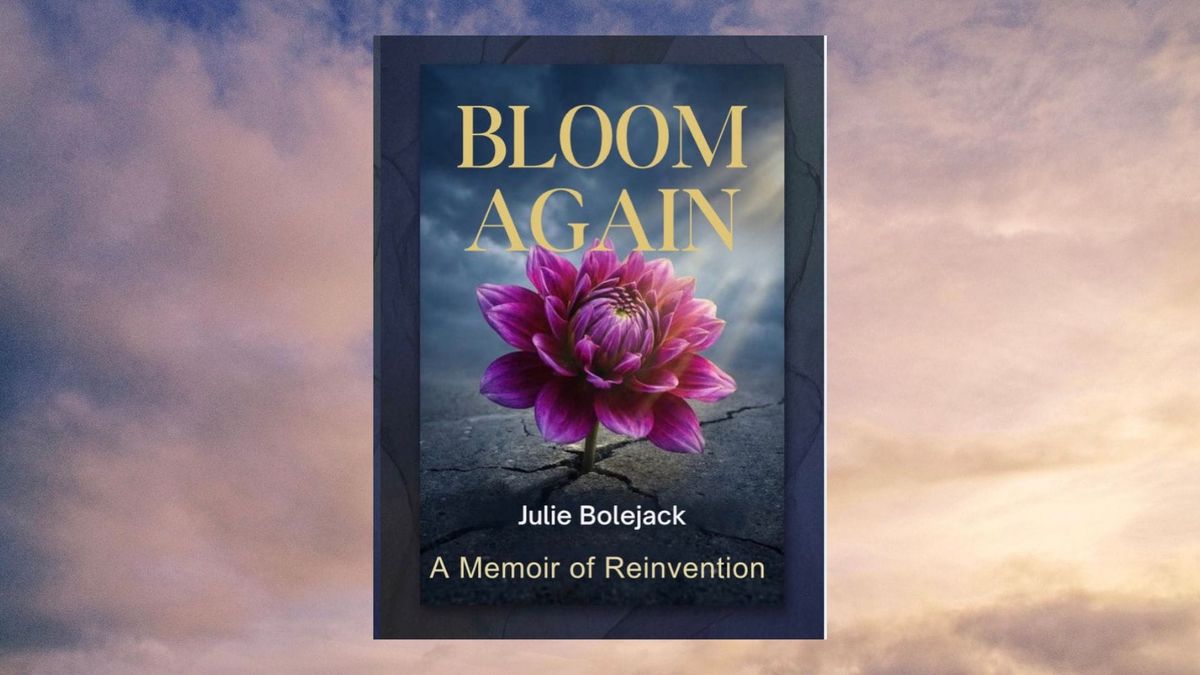
If my story resonates with you, I hope you’ll consider reading my book, Bloom Again: A Memoir of Reinvention — a reflection on reinvention, identity, resilience, and discovering that life still has new chapters waiting for us, even after we think we already know who we are.
P.S. I wonder what assumptions people make about you based on the role you’ve played for most of your life.
The responsible one.
The practical one.
The strong one.
The organized one.
The caretaker.
The professional.
And I wonder how many parts of yourself remain undiscovered — not because they were absent, but because life required other parts of you to lead for a while.
Maybe there are talents, ideas, dreams, or forms of creativity quietly waiting beneath the surface.
Not new.
Just finally ready to be seen.


