Regarding landscaping…my take
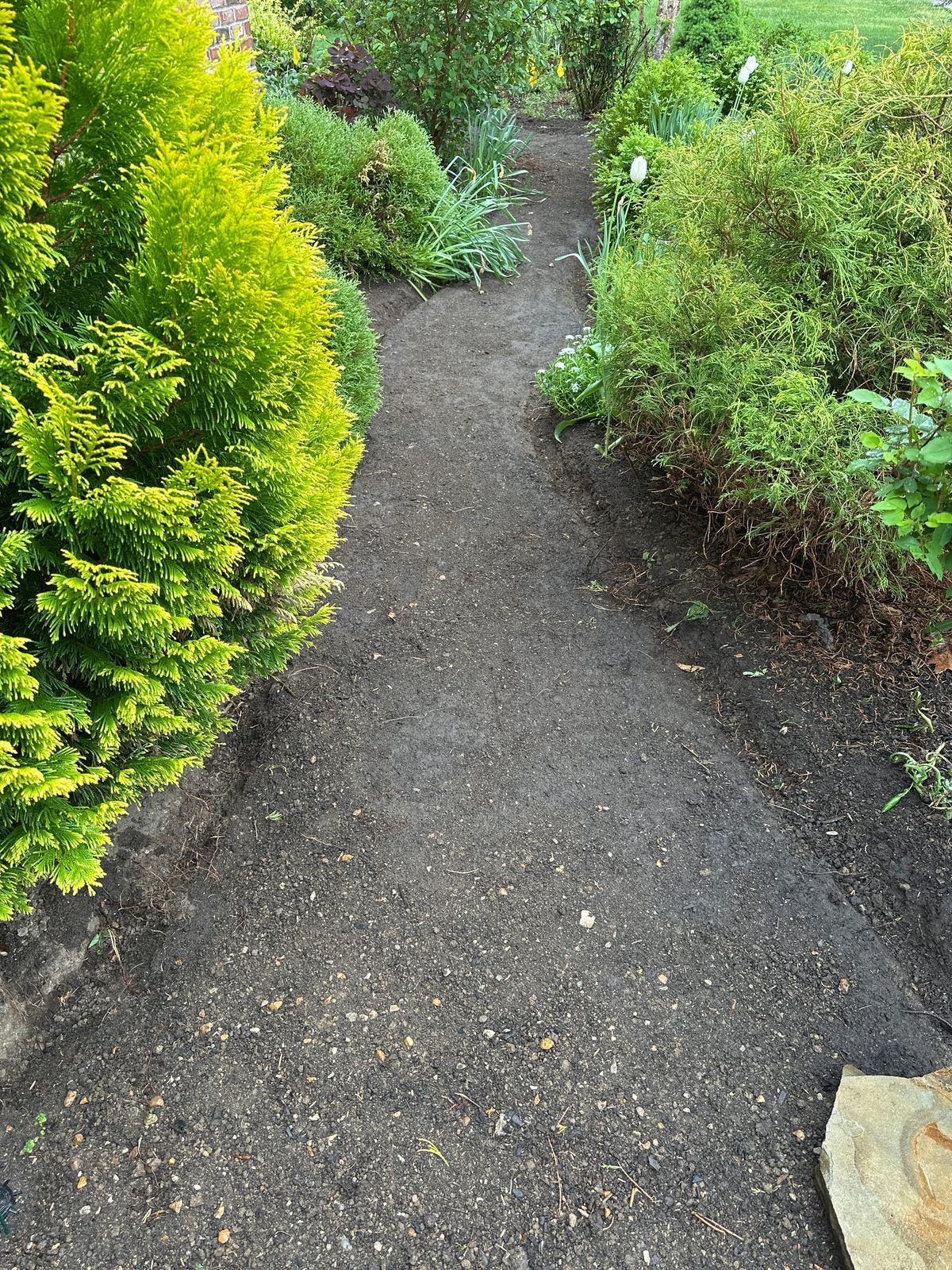
You don’t usually wake up one morning and think, Today I will wrestle with mulch, sweat, and a wheelbarrow that clearly resents me.
And yet—here we are.
Knees in the dirt. Debating edging. Hauling stones that seemed so much smaller at the garden center. Hiring help for the heavy lifting while still insisting on doing “some of it ourselves,” because apparently we are both practical and stubborn.
Which raises a fair question.
Why do we care?
Why do homeowners—reasonable, intelligent people—choose to spend time, money, and more than a little physical effort shaping patches of land that, left alone, would do just fine without us?
It’s not efficiency. It’s not necessity.
It’s something deeper.
Landscaping is one of the few places left in modern life where we participate directly in creation.
Not on a screen. Not through a meeting. Not through a system.
With our hands.
We clear. We choose. We place. We step back. We try again.
And slowly—almost imperceptibly—something begins to take shape that didn’t exist before.
There is a quiet, stubborn satisfaction in that.
Because most of life, especially later in life, can begin to feel like maintenance. Managing what already is. Responding to what comes at us. Adjusting, adapting, enduring.
But landscaping?
Landscaping is an act of intention.
You look at a space—overgrown, uneven, maybe a little tired—and you imagine what it could become.
Not perfect. Not magazine-ready. Just…better. More aligned. More alive.
And then you begin.
That act alone feeds something in us.
It reminds us that we are still capable of shaping our environment, not just reacting to it.
There’s also the matter of beauty.
Not the polished, curated kind we’re sold online, but the kind that emerges slowly.
A hosta unfurling in the shade.The soft spill of white impatiens against dark soil.The way stone steps, once cleared, invite you upward instead of warning you away.
Beauty, in this context, isn’t about impressing anyone.
It’s about creating a place you want to be.
A place that welcomes you back at the end of the day and says, quietly, You belong here.
We don’t talk about that enough.
We talk about curb appeal. Property value. Return on investment.
All perfectly valid.
But they miss the point.
Because the real return on landscaping isn’t financial.
It’s emotional.
It’s the small moment when you step outside with your coffee and notice that something you planted is actually growing.
It’s the pause at the top of the steps, looking back at what used to be chaos and is now…coherence.
It’s the feeling—hard to name, but unmistakable—that you’ve created a pocket of peace in a noisy world.
And then there’s nature itself.
We don’t control it, no matter how many bags of mulch we spread or how precisely we space our pots.
We collaborate with it.
We suggest. Nature responds. Sometimes generously, sometimes not at all.
Plants fail. Weather shifts. Things get eaten. Or don’t grow where we were certain they would.
And so we adjust.
There is humility in that.
A reminder that we are not in charge here, only participating.
In a world that often rewards control and certainty, landscaping teaches something different.
Patience.
Acceptance.
Resilience.
You can do everything “right” and still lose a plant. You can forget about something entirely and find it thriving anyway.
There’s a lesson in that, if we’re paying attention.
And perhaps the most surprising thing landscaping gives us is this:
Permission to care.
Not in a performative way. Not for approval.
But simply because caring itself is meaningful.
We choose the plants. We water them. We move them when they struggle. We try again.
No one is grading us.
No one is keeping score.
We care because it feels good to care.
At 73—or 43 or 23—that’s not a small thing.
To still invest effort in something that may never be “finished.”
To still believe that improvement is possible.
To still be willing to begin again, season after season.
If you’ve read my book, Bloom Again, you know this theme well.
We are not starting over.
We are continuing.
Landscaping is just another expression of that truth.
We don’t erase what was there before. We work with it. Around it. Through it.
We build on it.
Just like we do in our own lives.
So when you find yourself out there—clearing steps, placing pots, debating whether that plant needs more shade—know that you’re doing more than yard work.
You are creating space.
You are practicing presence.
You are choosing beauty.
And maybe, without even realizing it, you are tending to something inside yourself that needs just as much care as anything growing in the soil.
It’s not about perfection.
It’s about participation.
And that may be the real reason we landscape.
Not to impress the neighbors.
But to remind ourselves that we are still here, still capable, still connected—to the earth, to beauty, and to the quiet satisfaction of making something better than it was before.
Julie Bolejack, MBA
Thank you for reading and for being part of this thoughtful community. If this resonated, share it with someone who might be standing in their yard right now wondering where to begin.
And if you haven’t yet, you can subscribe at julies-journal.ghost.io—where we avoid the algorithms, the censors, and the overlords, and return to something more human.
My little book, Bloom Again - A Memoir of Reinvention is available on Amazon. eBook available now, print on demand available April 21.


