This May Be the Least Controversial Newsletter I’ve Written in Almost Three Years
Julie’s Journal | Monday, November 23, 2026
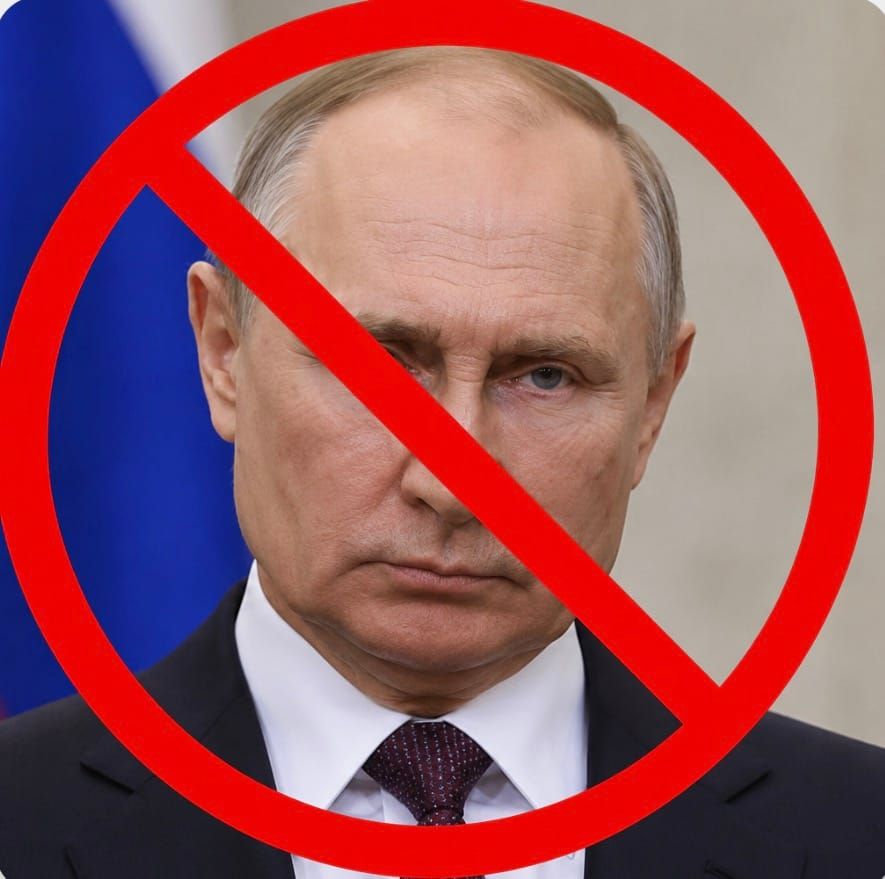
Vladimir Putin Is NOT America’s Friend.
For almost three years, I’ve been writing this journal, sharing my thoughts on politics, world events, government, and the occasional absurdity of everyday life.
I’ve written things people agreed with. I’ve written things people strongly disagreed with. I’ve probably caused a few readers to roll their eyes, shake their heads, or wonder what on earth I was thinking.
But today, I am going to make a statement that I believe should be about as controversial as announcing that water is wet.
Vladimir Putin is not America’s friend.
I am 99.9% certain of that.
And frankly, I’m leaving that remaining 0.1% only because I’ve lived long enough to know that absolute certainty can sometimes get you into trouble.
Now, before anyone starts waving their Republican or Democratic flag, this isn’t about political parties.
It’s about the United States of America.
And it’s about a man who has spent years demonstrating, through his actions, that weakening America and its democratic allies serves his interests.
Let’s Review the Evidence.
First, Putin has actively interfered in American democracy.
This isn’t speculation. It isn’t a Democratic talking point. And it isn’t something invented by people who dislike Donald Trump.
American intelligence agencies concluded that Russia conducted an influence campaign targeting the 2016 presidential election.
The Mueller investigation documented Russian intelligence hacking Democratic organizations, stealing information, and releasing it to influence American politics.
Russian operatives also used social media to impersonate Americans, spread disinformation, and inflame divisions within our country.
Think about that for a moment.
A foreign government deliberately tried to manipulate what Americans believed, how Americans argued, and ultimately how Americans voted.
Does that sound like something a friend would do?
Second, Putin has waged war against a sovereign European nation.
In February 2022, Russia launched its full-scale invasion of Ukraine.
Not because Ukraine invaded Russia.
Not because Ukraine attacked Moscow.
But because Putin chose to use military force against an independent country.
Since then, the war has killed and injured enormous numbers of people, displaced millions, destroyed communities, and devastated civilian infrastructure.
Homes. Hospitals. Schools. Power stations.
And the attacks continue.
In fact, even as Trump, Putin, and Chinese President Xi Jinping met in China last week and issued a declaration about peace, Russian missiles and drones continued striking Ukraine.
Peace declarations are lovely.
They mean considerably less when one of the people signing them continues bombing his neighbor.
Third, Putin has worked to weaken NATO and divide America’s allies.
For decades, NATO has been central to American security.
Its purpose is collective defense. An attack against one member is treated as an attack against all.
Putin has repeatedly portrayed NATO as an adversary, threatened its members, and sought to undermine the unity of Western democracies.
A divided NATO benefits Russia.
A weakened Europe benefits Russia.
An America that distrusts its traditional allies benefits Russia.
I don’t see how any of those outcomes benefit the United States.
Fourth, Russia has conducted cyberattacks and espionage operations against American interests.
Russian intelligence-linked operations have targeted American government agencies, companies, political organizations, and critical infrastructure.
One particularly alarming example was the SolarWinds cyberespionage operation discovered in 2020, which compromised software used by numerous American government agencies and private organizations.
The United States attributed that operation to Russia’s foreign intelligence service.
This wasn’t a disagreement over tariffs or trade policy.
It was a sophisticated intrusion into American systems.
And Russia’s cyber operations have not been limited to the United States.
Our allies have been targets, too.
Fifth, Putin has strengthened relationships with countries that challenge American interests.
Russia has deepened military and strategic cooperation with China, Iran, and North Korea.
Iran has supplied drones and other military support for Russia’s war in Ukraine. North Korea has supplied weapons and troops.
These relationships strengthen governments whose interests frequently conflict with those of the United States and its allies.
Now, countries don’t have to agree with America on everything.
But let’s not confuse strategic cooperation among America’s adversaries with friendship toward America.
And finally, consider how Putin governs his own country.
Political opposition is suppressed. Independent journalism faces severe restrictions. Critics have been imprisoned, forced into exile, or killed.
Alexei Navalny, perhaps Putin’s most prominent political opponent, died in a Russian prison in February 2024.
Russia is not a functioning liberal democracy. Putin’s government is authoritarian, and political power is concentrated around him.
That doesn’t automatically make every Russian citizen our enemy. Far from it.
The Russian people and Vladimir Putin are not interchangeable.
But it tells us something important about the kind of government we’re dealing with.
So Why Does Donald Trump Call Him His Friend?
Last week, during his meeting with Putin and Xi Jinping in China, President Trump approached Putin and declared:
“He’s my friend.”
He also spoke warmly about their long relationship and suggested that wonderful things could come from their discussions.
Then, on Friday, November 20, a reporter asked Trump a rather obvious question.
Was Putin a friend to America?
Trump’s response?
“I can’t speak to America.”
Excuse me?
The president of the United States can’t speak to whether Vladimir Putin is a friend to the United States?
He went on to describe how nice Putin had been to him during the investigations into Russian election interference.
And he emphasized their very good personal relationship.
Well, I’m glad somebody was nice to Donald Trump.
But I would have thought the question of whether Putin is America’s friend deserved something more substantial than whether he had been personally pleasant.
Because here’s the distinction that matters.
Being Donald Trump’s friend and being America’s friend are two entirely different things.
So What Does Trump See That the Rest of Us Don’t?
I have a few theories.
And let me be clear: these are theories, not accusations of secret arrangements or claims that I know what Trump is thinking.
Perhaps Trump genuinely believes personal relationships are the key to international diplomacy.
There is some logic to that.
Presidents must talk with adversaries. Diplomacy often requires sitting across the table from people whose actions we strongly oppose.
Franklin Roosevelt and Winston Churchill negotiated with Stalin during World War II.
Ronald Reagan negotiated with Soviet leader Mikhail Gorbachev.
Talking to adversaries isn’t weakness.
But understanding that they are adversaries is essential.
Perhaps Putin understands Trump’s personality exceptionally well.
Trump has repeatedly demonstrated that he values personal loyalty, public praise, and being treated with respect.
Putin is an experienced intelligence officer and political operator.
Is it unreasonable to wonder whether he understands how to use flattery to his advantage?
I don’t think so.
Perhaps Trump admires Putin’s ability to exercise power without the constraints of a democratic system.
Trump has often expressed admiration for leaders he considers strong.
Putin doesn’t face an independent Congress, a genuinely competitive electoral system, or a free press capable of holding him accountable.
From the outside, that may look like extraordinary power.
But power without accountability isn’t strength in the democratic sense.
It’s authoritarianism.
Or perhaps Trump believes that by maintaining a personal friendship with Putin, he can accomplish something other American presidents couldn’t.
Maybe he believes he can end the war in Ukraine.
Maybe he believes he can improve relations between the two nuclear powers.
Maybe he believes he can make a deal that changes history.
If he could secure a just and lasting peace, protect American interests, and strengthen global stability, I would welcome that achievement.
I suspect millions of Americans would.
But diplomacy should be measured by results, not compliments, handshakes, or photo opportunities.
And Putin has given us precious little reason to trust his promises.
Here’s What I Keep Coming Back To.
I grew up during the Cold War.
I remember when American presidents, Republican and Democratic alike, understood that the Soviet Union represented a serious strategic threat.
I remember the Berlin Wall, the nuclear anxieties, the arms race, and the extraordinary relief when the Cold War finally ended.
I also remember Ronald Reagan’s famous approach to dealing with the Soviets:
Trust, but verify.
It was a sensible philosophy.
And it remains sensible today.
We should communicate with Russia. We should seek agreements that reduce the danger of nuclear conflict. We should pursue peace wherever possible.
But none of that requires pretending that Vladimir Putin has America’s best interests at heart.
He doesn’t.
He has Russia’s interests at heart, as he defines them. And his actions demonstrate that he is willing to undermine other countries, violate their sovereignty, and use military force to pursue those interests.
I don’t need to know what Putin says privately to Donald Trump.
I don’t need to know whether they laugh together, exchange compliments, or genuinely enjoy one another’s company.
I need to look at what Putin actually does.
And what he does tells me everything I need to know.
One Final Thought.
After almost three years of writing about subjects that divide Americans, I would have thought this one might bring us together.
Republicans, Democrats, independents, conservatives, liberals, and everybody who has simply had enough of the political circus.
Surely we can agree on this much:
The president of the United States is entitled to have personal relationships. But his first loyalty must always be to the United States of America.
Not to a foreign leader.
Not to a political ally.
Not to someone who flatters him.
To America.
And when the president is asked whether Vladimir Putin is America’s friend, I would hope he could answer that question without hesitation.
I certainly can.
Vladimir Putin is not America’s friend.
I’m 99.9% certain.
And that may be the least controversial thing I’ve written in nearly three years.
Although, given the times we’re living in, I’m sure someone will manage to disagree.
Until Wednesday,
Julie Bolejack, MBA
The Mindful Activist
To subscribe: julies-journal.ghost.io
Julie’s Journal — A little perspective, a few questions, and occasionally a raised eyebrow.